
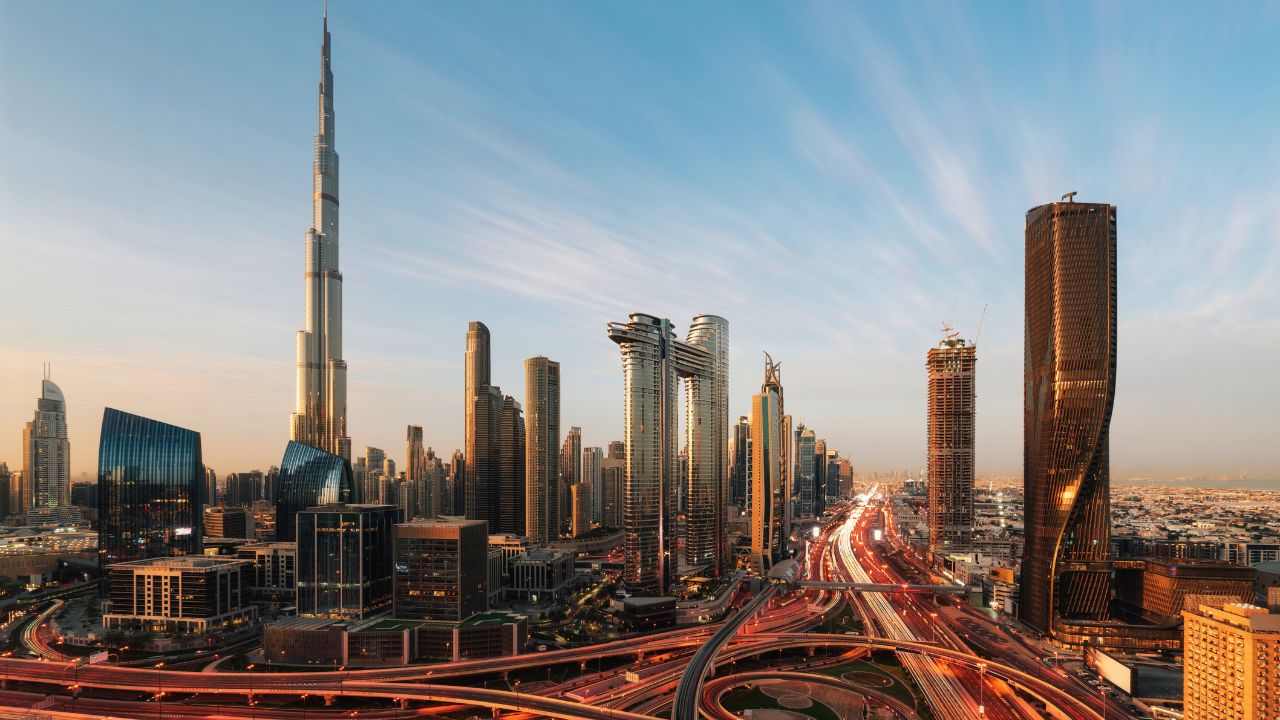
Geopolitical upheaval challenges Dubai’s reputation as a secure property investment.
Dubai’s real estate market, known for its robustness and attraction to global investors, now faces a significant confidence challenge as regional geopolitical tensions escalate in the Gulf. This situation has resulted in increased volatility across financial markets and a discernible slowdown in real estate activities.
An Unexpected Turning Point for Investment
The recent sharp decline in the Dubai Financial Market and Abu Dhabi Securities Exchange, triggered by Iranian missile and drone attacks on UAE soil, has caused many investors to reconsider their strategies. Historically, Dubai has enjoyed a reputation as a “safe haven” for capital, drawing investments even amid regional turmoil. However, this longstanding narrative is currently under scrutiny as heightened geopolitical risk influences investor behavior.
Reports indicate a noticeable shift among buyers, particularly international investors. Major groups, especially those from India and other foreign markets, have adopted a cautious “wait-and-see” stance, postponing property purchases until they assess the geopolitical landscape and its implications on the market. Analysts observe that this hesitation is evident in transaction timelines, particularly affecting the luxury and investment segments, which have typically attracted substantial cross-border capital.
Real estate professionals are noting that the pace of deals is slowing, with fewer new buyer inquiries compared to the vibrant activity seen in late 2025 and early 2026. This growing caution underscores a more cautious approach to property investment as the market grapples with new challenges.
Strong Fundamentals Offering a Silver Lining
Despite the recent sentiment shift, the underlying fundamentals of Dubai’s real estate market remain strong. Data from Arabian Business reveals that real estate sales in February 2026 reached approximately AED 60.8 billion (around US$16.6 billion), primarily driven by off-plan transactions and a significant proportion of cash buyers. Such indicators had initially foreshadowed success even before the emergence of recent geopolitical tensions.
Market analysts caution that the “safe-haven” paradox—where geopolitical conflict draws in capital while also instilling risk aversion—might be at play. If uncertainty persists for the next 4-8 weeks, but local employment rates, credit access, and connectivity remain robust, insights from Morgan Owen, managing director of ANAROCK Group for the Middle East and North Africa, suggest that a significant 60-80% of currently stalled real estate transactions could potentially close in the coming quarter, albeit possibly restructured or repriced.
In previous instances of disruption, such as during the COVID-19 pandemic or oil price declines, the market has generally experienced deal deferrals rather than outright cancellations. For real estate agents and institutional investors, the current market dynamics appear to point towards a phase of short-term risk reassessment rather than a definitive downward trend.
Key Insights and Future Considerations
As we navigate this period of uncertainty, the focus should be on sentiment rather than supply as the primary driver of the current slowdown. Buyers are deferring purchases rather than canceling them altogether, indicating that confidence may rebound with a return to geopolitical stability. The cash buyer segment and off-plan markets, which have significantly supported recent growth, continue to demonstrate resilience, albeit with diminished inquiry levels.
Furthermore, the volatility in equity markets, particularly in sectors linked to real estate and financial stocks, may continue to inform investor attitudes and costs of capital in the short term. With its strong regulatory framework and consistent capital influx, Dubai’s real estate ecosystem has historically remained stable in the face of regional shocks.
However, the latest geopolitical tensions have amplified investors’ sensitivity to risks, highlighting the need for continuous monitoring of both geopolitical developments and market sentiment in the months ahead. As Dubai’s property market navigates this challenging landscape, stakeholders remain hopeful for a turnaround as conditions evolve.