
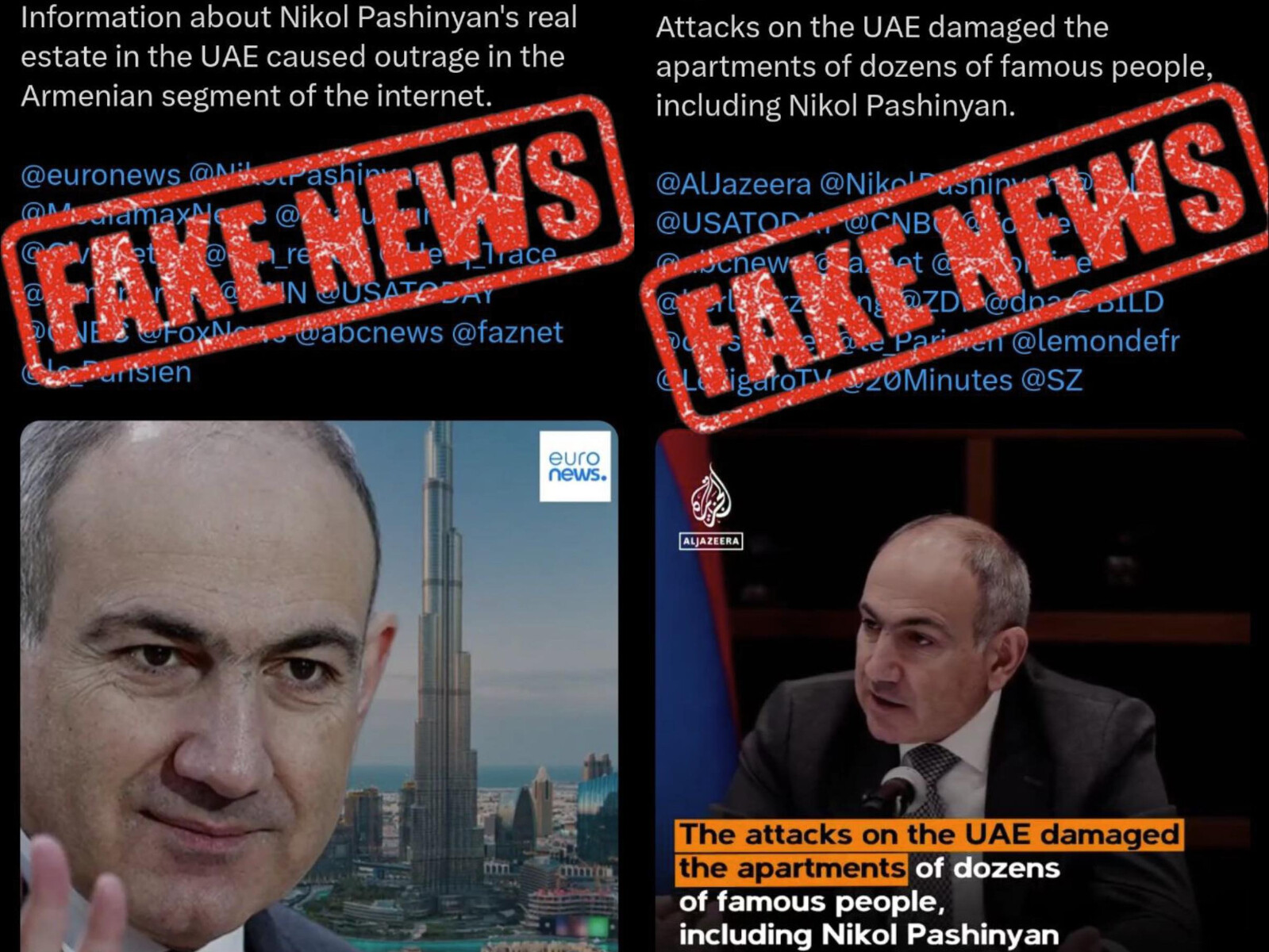
As Middle East tensions rise, a disinformation effort against the Armenian Prime Minister ramps up with false allegations about Dubai real estate.
Several dubious accounts have been disseminating misinformation by employing the logos of credible media organizations to undermine Armenian Prime Minister Nikol Pashinyan and his spokesperson. The spread of such false narratives poses threats not only to individuals but also to the integrity of information shared in the public domain.
Understanding the Impact of Disinformation
Disinformation campaigns can have significant consequences, particularly in politically sensitive regions like Armenia. This type of manipulation can erode public trust in legitimate news sources and compromise the democratic process. The ability for individuals to discern credible information from falsehoods is crucial, especially during times of political uncertainty. In Armenia’s rapidly evolving political landscape, these tactics can incite confusion and undermine public confidence in governance.
Additionally, the ramifications of disinformation extend beyond politics. It can fuel social tension and division among communities, making it easier for malicious actors to incite unrest. As these campaigns spread, they can create an environment where misinformation thrives, making it increasingly difficult for the populace to make informed decisions. Therefore, vigilance is essential in recognizing and combating such tactics.
The Role of Social Media in Spreading Misinformation
Social media platforms have become fertile ground for the propagation of misleading information. With the ease of sharing content, users may inadvertently amplify false narratives, lending them an undeserved credibility. Misinformation tactics often leverage emotional appeals and sensationalism to attract attention, making it imperative for users to critically evaluate the information they encounter.
In the context of the Armenian political situation, these accounts exploit the visually identifiable logos of respected media outlets, creating a misleading sense of authority. This not only misguides the audience but can also damage the reputations of the legitimate news organizations that are being impersonated. Therefore, being discerning about the sources of information is more crucial than ever in an age defined by digital connectivity.
Counteracting Disinformation: Steps to Take
Combating disinformation requires a collective effort from citizens, media organizations, and policymakers. One effective approach is media literacy education, which empowers individuals to analyze the credibility of sources, recognize biases, and identify factual information. Schools, community organizations, and online platforms can collaborate to create programs that enhance public understanding of how to navigate the digital information landscape.
Moreover, regulatory measures can be implemented to hold social media companies accountable for the dissemination of false content. Establishing guidelines that require transparency about the sources of information can help mitigate the spread of disinformation. By fostering cooperation between technology firms and governments, a more secure and informed online environment can be created.
In conclusion, the emergence of deceptive accounts using reputable media logos to target those in power is a pressing issue that demands immediate attention. Through education and collective responsibility, society can build resilience against misleading narratives and safeguard the integrity of public discourse.