
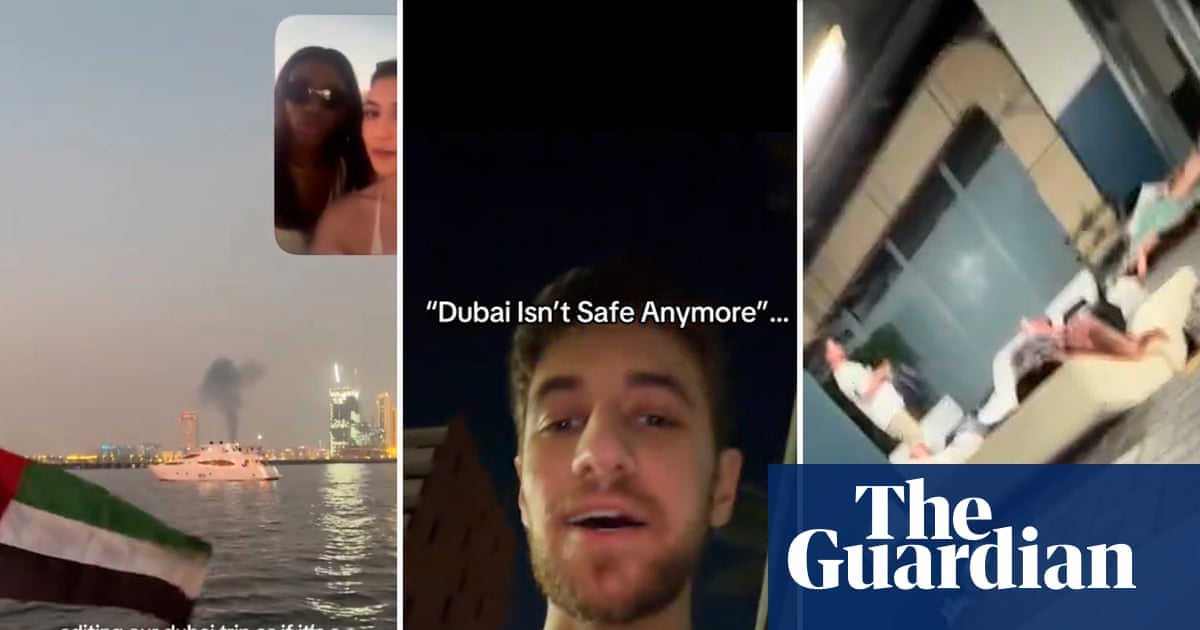
Iran Strikes Disrupt Dubai Influencers’ Lavish Lifestyles: ‘Safety is shattered’
Dubai Under Fire: Resilience Amid Chaos
A recent missile attack on Dubai sent shockwaves through the city, known for its opulence and safety. On a seemingly ordinary weekend, the nightlife exploded into an unexpected reality as emergency alerts urged residents to seek shelter. Despite the chaos, many continued their lavish celebrations, highlighting an intriguing dichotomy between the threat of violence and a lifestyle centered around luxury.
Maintaining Normalcy in Crisis
Witnessing the unfolding events was 23-year-old Mike Babayan, who had relocated from Los Angeles to Dubai in 2020 for finance-related opportunities. On Saturday night, while enjoying the local nightlife, he could hear explosions nearby, leading him to temporarily abandon his home in the iconic Burj Khalifa for a more sheltered location. Despite hearing the missiles every half-hour, Babayan described the public mood as oddly oblivious. People were enjoying their hookah and meals, seemingly unfazed by the imminent danger.
As the chaos unfolded, Babayan transitioned his social media focus to documenting the events on TikTok. With almost 150,000 followers, he felt a responsibility to clarify misinformation spreading online, including debunking an AI-generated video claiming the Burj Khalifa was on fire. He emphasized that even amidst the turmoil, Dubai felt safer than cities like New York and Los Angeles, allowing him to venture out without constantly looking over his shoulder.
The Influencer Response
Dubai has become a hub for influencers and content creators seeking to showcase a glamorous lifestyle. Amid the missile attacks, participants in the city’s vibrant nightlife couldn’t resist capturing the scenes and sharing them online. Will Bailey, a British travel influencer, observed missiles falling while documenting his experience from a beach club. The irony was palpable; even as chaos loomed, the party continued, prompting bewilderment from viewers.
This peculiar blend of luxury and crisis extended to various influencers, including one British entrepreneur who lamented the disruptions to her travel plans due to the attacks. Their portrayals sparked debates about entitlement and insensitivity during crisis situations. Babayan noted that while some influencers promoted a superficial version of life, others initiated conversations about the ongoing conflict, contributing to a nuanced portrayal of life in a city recently under fire.
Reactions and Reflections
According to Dr. Sreya Mitra, an associate professor studying the influence of social media, Indian influencers residing in Dubai felt compelled to reassure their audiences back home. Many sought to counter exaggerated media narratives to promote a sense of normalcy, emphasizing that life in Dubai goes on as usual. Despite confirmed damage and casualties from the conflict, the overall message remained one of stability and safety.
This peculiar landscape both captivates and confounds. As commentators analyze the behavior of influencers, discussions often focus on their perceived disconnect from the realities others face. Dr. Zoe Hurley notes that influencers often promote an escapist narrative while downplaying underlying tensions, creating a “city of contradictions.” Although the UAE reported fewer casualties in the ongoing conflict compared to its neighbors, it cannot overlook the ongoing tensions surrounding civil rights and freedoms.
A Fractured Illusion
The situation in Dubai serves as a stark reminder that even the most glamorous images can be disrupted by external conflict. Escaping the gravity of war, influencers engaged with their audiences in real-time, yet inevitable questions linger about authenticity and the significance of their experiences. To many onlooker’s, these online snapshots appear inadequate in capturing the complexities of war and its far-reaching implications.
Influencers like Bailey defended their presence online, stating that sharing real-time experiences provided value to their followers. However, the dichotomous nature of their posts poses philosophical questions about the role of social media in conveying the depths of human experiences, especially when dealing with crises that have historical roots.
As the world watches, the lives of social media influencers become a canvas reflecting human resilience in the face of conflict. Despite the chaos surrounding them, many continue to live and express themselves as they always have, embracing a sense of normalcy in an unyielding environment. Each post, each video, serves as a fragment of broader narratives, weaving together the complexities of modern life within a city that remains unparalleled in its contradictions.