
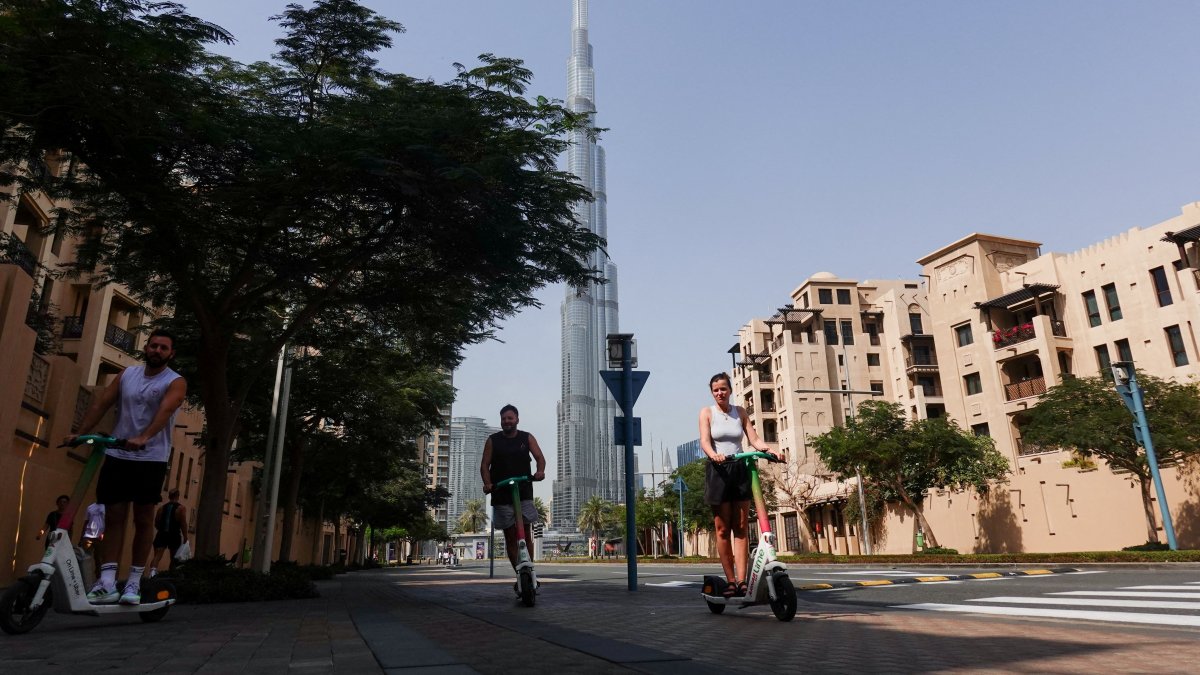
Middle East turmoil challenges perceptions of Dubai.
Dubai has long been portrayed as a symbol of opulence, drawing individuals with its sky-high buildings and favorable business conditions. Yet, the allure of this metropolis is facing an unprecedented challenge as the recent regional conflicts have breached its borders, marking a pivotal moment in its evolution as a stable business hub.
The Impact of Regional Conflict
In a significant shift for Dubai, missile strikes from Iran targeting vital sectors—including airports, hotels, and ports—have rattled the city’s carefully constructed facade of safety. While the UAE government has urged calm and asserted that they have the situation under control, investors and residents are understandably anxious. The fallout, both psychological and physical, threatens to undermine Dubai’s reputation as a safe haven for expatriates and their businesses, raising doubts about its ability to maintain the status quo.
Jim Krane, a fellow at Rice University’s Baker Institute, highlights the precarious state of Dubai’s economic model. Although damage from the strikes appears limited, the psychological toll on the city could catalyze an exodus of investment. “The longer the conflict drags on, the more investors will seek alternatives,” he warns, emphasizing that capital is highly mobile in times of uncertainty. As UAE stock markets temporarily shuttered amidst the unrest, the ripple effects on local businesses became evident.
How Dubai Established Itself
Dubai’s transformation from a humble fishing port into a global financial powerhouse has been a decades-long endeavor, built upon strategic infrastructural and regulatory advancements. Major milestones include the launch of Emirates airline in 1985 and the establishment of the Burj Al Arab in 1999, which positioned Dubai as a luxury destination. Moreover, changes in property ownership laws in the early 2000s boosted foreign investment, accelerating economic diversification beyond its oil wealth.
Today, oil contributes less than 2% to Dubai’s GDP, with sectors like trade, tourism, and financial services taking precedence. Neighboring Abu Dhabi still relies heavily on oil revenue for its growth, but Dubai has effectively capitalized on its strategic location to become a central player in global trade.
Challenges Ahead
Despite its progress, Dubai remains vulnerable to regional instability, largely because of its proximity to the Strait of Hormuz, a critical maritime route for global oil shipping. Recent missile strikes have highlighted this fragility—Damage to key locations, including Dubai International Airport, has left thousands stranded and disrupted a hub that has been vital for international travel.
Industry analysts express concern over the long-term implications of this instability. “Travelers may now consider alternative routes rather than transiting through Dubai,” warns independent aviation adviser Bertrand Grabowski. The temporary closure of major airports has raised questions about the city’s future as a transit hub and the resilience of its booming tourism sector.
Looking to the Future
As Dubai grapples with the aftermath, the challenge lies in quickly restoring confidence among travelers and investors alike. While many believe the city will rebound, the current geopolitical context introduces an uncertainty that could linger. Analysts point out that competition from other regional hubs, coupled with evolving logistics in aviation, may complicate Dubai’s recovery trajectory.
Despite the obstacles, supportive geography remains in Dubai’s favor, with a significant population base within a short flying radius. The real test will be how Dubai navigates this moment of crisis and whether it can retain its status as a premier global hub amidst growing competition. The clock is ticking, and the direction of the emirate’s future hangs in the balance.