
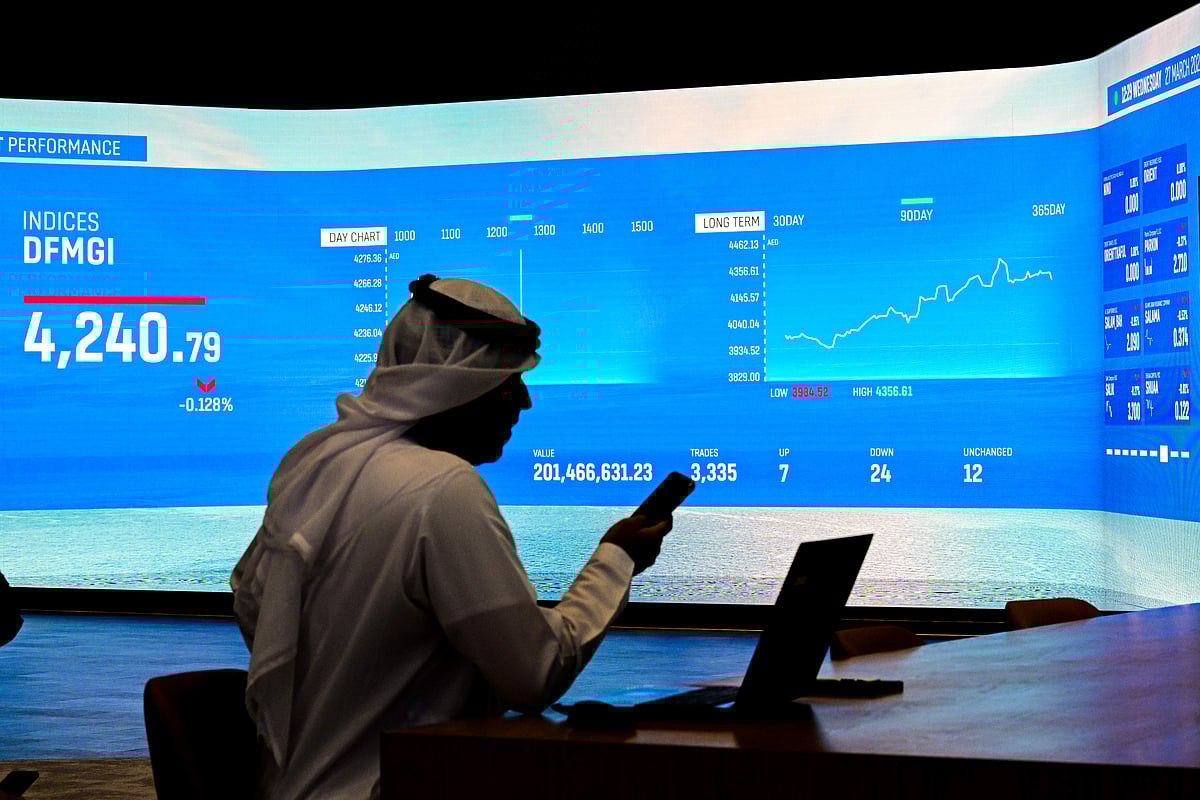
Turning Dh10,000 into Over 11% Growth in 2023
The Dubai Financial Market (DFM) has experienced significant growth this year, with an impressive increase of over 11%. This means that if an individual had invested 10,000 AED, it would now be valued at around 11,100 AED, reflecting the market’s robust performance. Similarly, a 50,000 AED investment would have ballooned to approximately 55,500 AED. For many residents of the UAE, this kind of consistent growth is a more appealing factor for long-term investments than short-term fluctuations.
What is Driving Market Growth?
This year, Dubai’s stock market has marked its best start in over a decade. Unlike markets that heavily rely on fluctuating oil prices or transient tech trends, Dubai’s growth is firmly rooted in tangible economic activities. The city’s economy thrives primarily on non-oil sectors, which include:
– Real estate
– Banking
– Retail and tourism
– Financial services
These areas are part of daily life, with signs like bustling malls, flourishing businesses, and crowded hotels evident throughout the city. This diversified economic structure explains why Dubai stocks have gained traction even amid global market turbulence.
Key Contributors to Market Gains
A considerable portion of the current surge in the Dubai market can be attributed to a couple of familiar entities. Shares of Emirates NBD have surged by approximately 33%, bolstered by a strong lending environment and healthy profit margins. This translates to significant gains for investors without the necessity of pursuing riskier assets. Additionally, property developer Emaar Properties, renowned for iconic landmarks such as the Burj Khalifa and Dubai Mall, has also enjoyed double-digit growth this year. Steady property sales and unwavering demand kept their performance strong, even amid concerns about potential oversupply in high-end properties. These two companies together accounted for around 60% of the market’s uptrend.
Dubai’s Unique Market Characteristics
What sets Dubai apart from many regional markets is its economic makeup—an impressive 95% of its GDP stems from non-oil activities. This reduces its linkage to volatile global commodity prices and establishes a correlation with factors such as population growth, tourism, and urban development. A fund manager highlighted that the constant influx of residents and heightened activity is clearly reflected in the revenues and profits of local companies. For everyday investors, this degree of stability can be incredibly reassuring.
Current Investment Affordability and Risks to Consider
Despite the upsurge, shares in Dubai are not deemed excessively priced when compared to global markets. Currently trading at approximately 11 times expected earnings, they are cheaper than many emerging markets, which average around 13 times. Over the past five years, Dubai stocks have outperformed broader emerging-market indicators, yet their valuations remain relatively manageable. This balance—of promising growth prospects without exorbitant pricing—encourages many investors to consider integrating Dubai assets into their portfolios.
Nonetheless, some experts caution against ongoing gains at the current rate. Certain fund managers observe a lack of prominent technology or AI firms within Dubai, which have been pivotal in boosting other markets. Additionally, the major publicly listed firms in Dubai tend to be well-established, leading to steady but not explosive growth. However, there is potential for Dubai to benefit if the current hype surrounding AI stocks dissipates or becomes unpredictable. The emirate’s robust domestic growth and limited dependence on oil prices might mitigate the impacts of global shifts.
In summary, for residents of the UAE, the message is not about attempting to outperform global markets but about embracing steady growth. Dubai stocks have provided consistent returns, supported by the city’s development and the rising economic activity of its residents. For long-term investors, this calm and reliable growth is often more valuable than chasing fleeting trends.