
Grant claims Dubai’s economy may surpass Western democracies despite authoritarian risks.
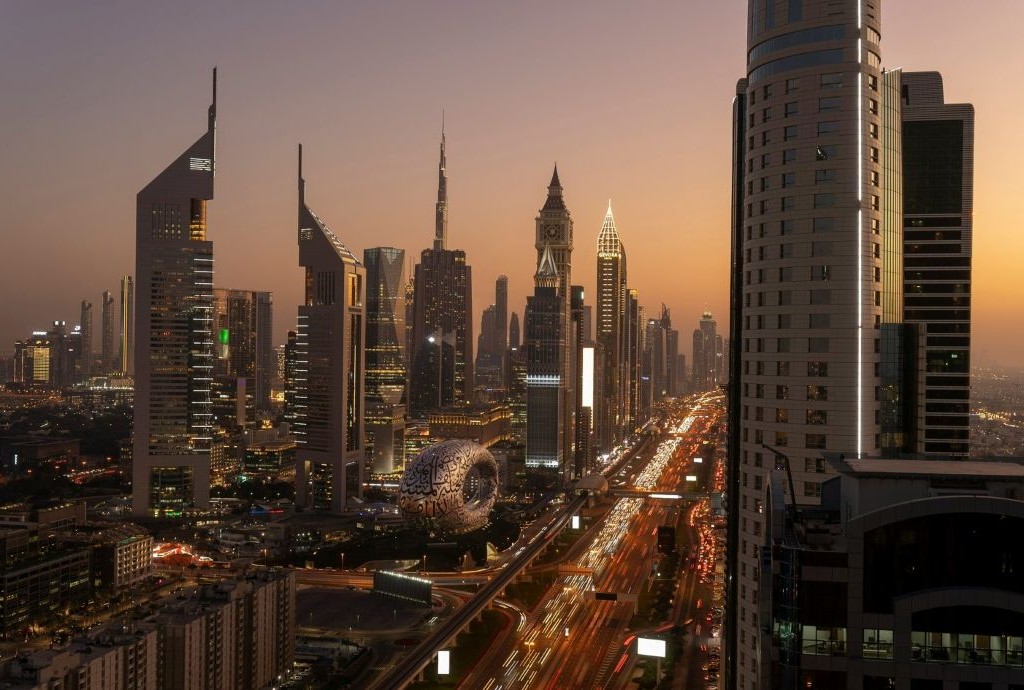
Dubai has undergone a remarkable transformation, evolving from a modest desert settlement into a bustling global metropolis. Columnist Damien Grant emphasizes that this extraordinary rise cannot simply be attributed to oil wealth, especially since oil now constitutes less than 1% of Dubai’s GDP. Instead, Grant points to the dynamic mixture of foreign investment and migrant labor as pivotal elements behind Dubai’s success, alongside a carefully managed state structure that encourages growth.
Economic Structure and Taxation in Dubai
Grant explains that Dubai has established a unique economic framework characterized by minimal taxation. The emirate boasts no personal income tax for individuals, a nominal 9% corporate tax, and primarily relies on a 5% Value Added Tax coupled with various government fees. This tax-friendly environment attracts businesses and expatriates alike, enhancing its position as a global business hub. Additionally, the city harbors a population where locals comprise only about 10%, while the majority of residents are expatriates with limited rights concerning residency and permanence.
Immigration and Workforce Dynamics
Despite the absence of political rights and minimal residency security for most residents, Grant notes that many individuals continue to flock to Dubai in search of work and safety. He suggests that the emirate offers a sense of security that, in some instances, surpasses that of other global locations. Local welfare systems are primarily reserved for citizens, forcing non-nationals to self-insure or bear out-of-pocket healthcare expenses. This creates a landscape where the prospect of employment outweighs the challenges posed by residency status, drawing individuals from diverse backgrounds to the emirate.
Contrasting Economic Models
Grant’s analysis challenges conventional Western beliefs regarding governance and economic stability. He argues that Dubai exemplifies the effects of an economy that encourages productivity while minimizing punitive taxation. The emirate’s success serves as a counterpoint to traditional models often funded through high tax bases that benefit the entire populace. Instead, Dubai’s approach appears to reward industriousness while limiting state intervention, providing a practical case for reevaluating existing economic paradigms.
Challenges of Authoritarian Governance
However, Grant does raise concerns about the vulnerabilities inherent in Dubai’s authoritarian system. He notes that such a model is susceptible to the unpredictability associated with leadership succession, hinting at potential instability in the future. The challenge for Dubai lies in its reliance on an authoritarian monarchy, where changes in leadership could impact the nation’s trajectory. This point serves as a reminder that while economic prosperity can be achieved through innovative governance structures, the sustainability of such systems remains uncertain.
In summary, Dubai’s transformation from a small desert settlement into a vibrant global city cannot be solely attributed to its oil reserves. Instead, it is the blend of foreign capital, imported labor, and a supportive economic framework that has propelled its development. While its approach to governance presents an intriguing model for economic growth, the potential risks associated with its authoritarian regime must also be taken into account. As Dubai continues to redefine its identity and role on the global stage, it provides valuable lessons for other nations navigating their paths toward prosperity.