
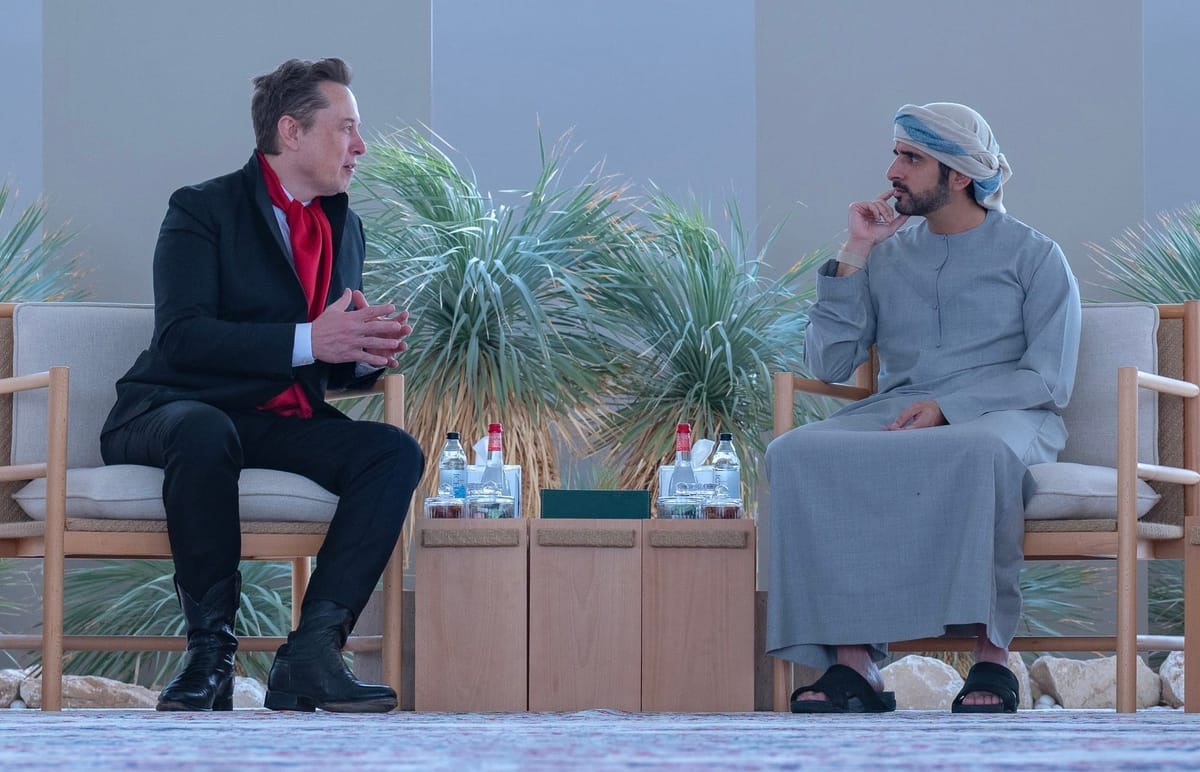
Elon Musk Engages with UAE Officials on AI and Innovation
Elon Musk’s recent visit to Dubai has captured attention, as it highlights a shift in the global tech landscape. Instead of viewing the Middle East as merely a financial backer, Musk’s interactions signal significant partnerships aimed at harnessing the region’s potential in advanced technologies and artificial intelligence.
Strategic Meetings with UAE Leaders
During his visit, Musk engaged in high-level discussions with President Sheikh Mohamed bin Zayed Al Nahyan and Crown Prince Sheikh Hamdan bin Mohammed. These meetings revolved around key areas such as space exploration, artificial intelligence, and innovative technologies. Following these discussions, Sheikh Hamdan took Musk on a personalized tour of Dubai to explore various technological advancements. The dialogues not only emphasized collaboration but also reinforced the UAE’s commitment to becoming a leader in these fields.
Tesla’s European Challenges
Musk’s visit also comes at a critical time for his companies. With his net worth reportedly surpassing $700 billion, Musk faces challenges in Western markets. For instance, Tesla experienced a drastic 50% drop in sales in Europe in April 2025, influenced by growing consumer boycotts linked to Musk’s political views. Meanwhile, the Cybertruck launch in the U.S. has encountered roadblocks. This backdrop underscores Musk’s need to explore more welcoming markets, particularly in the Middle East.
Innovative Infrastructure Projects
A significant highlight of Musk’s Dubai trip was the discussion surrounding the Dubai Loop, a groundbreaking underground transit project. This ambitious venture, which was unveiled during the World Government Summit, will span 17 kilometers, feature 11 stations, and is designed to transport over 20,000 passengers per hour at speeds reaching 160 km/h. The initiative is a collaborative effort between Dubai’s Roads and Transport Authority and Musk’s The Boring Company, with operations slated to commence by Q2 2026.
The UAE’s Competitive Edge
What stands out in this partnership is the UAE’s ability to execute projects rapidly, contrasting sharply with the regulatory debates ongoing in the U.S. and Europe regarding AI and antitrust issues. Sheikh Hamdan indicated that the UAE’s strategic partnerships and investment in human capital are essential for fostering innovation. Musk’s favorable remarks about the UAE’s technological achievements further exemplify the productive relationship forming between his companies and the region.
The convergence of Musk’s ambitions with the UAE’s goals hints at a larger trend: as regulatory frameworks tighten in Western markets, Middle Eastern countries are emerging as attractive alternatives for tech innovations. The Gulf region is positioning itself as a hub for advanced technologies, and Musk appears eager to tap into this momentum.
In summary, the increasing cooperation between Musk and the UAE encapsulates a broader shift in the global tech landscape: the Middle East is not merely a participant but is actively competing to host the future of technology. As partnerships deepen and investments flow into ambitious projects, it becomes evident that the UAE is poised to play a pivotal role in shaping the next phase of technological advancement.