
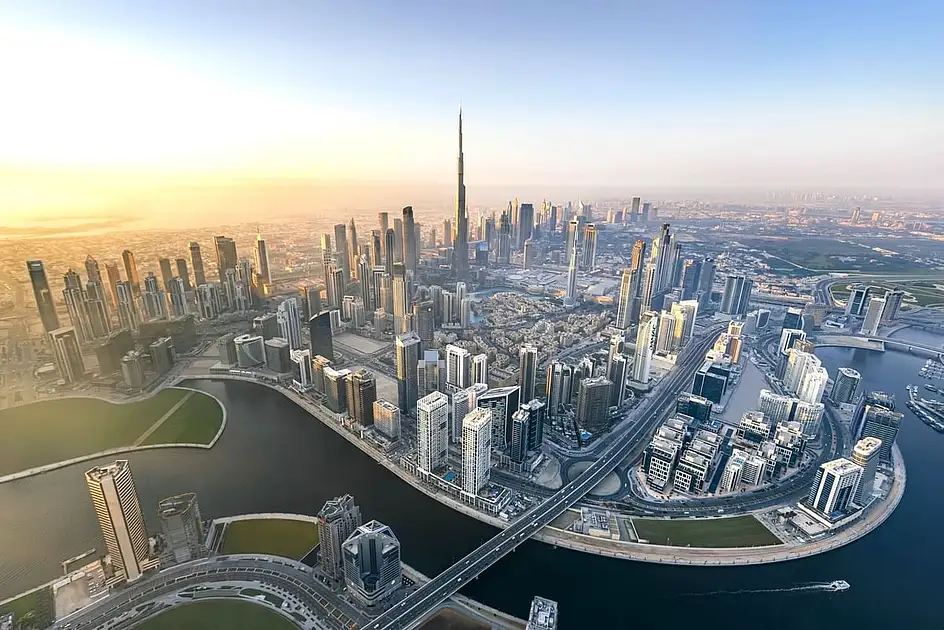
Dubai’s GDP Hits Dh473 Billion in Early 2026
Dubai’s economic landscape has shown some shifts in early 2026, with its real gross domestic product (GDP) reaching around Dh473 billion in the first half of the year. This figure marks a decline of 2.3% compared to the same timeframe in the previous year, as reported by the Dubai Data and Statistics Establishment. The economic scene in H1 2026 reflects significant changes in the global economic setting, influencing various sectors to different degrees.
Economic Overview and Sector Performance
The real GDP for Dubai was approximately Dh484 billion in H1 2025, reflecting the backdrop of evolving global conditions. Despite the overall dip in real GDP, several key sectors, including financial services, healthcare, information technology, and construction, have positively contributed to economic growth. Notably, the GDP at current prices hit around Dh505 billion, achieving a growth rate of 0.2%. This indicates resilience in certain strategic and service sectors, which have continued to deliver favorable growth rates.
Strong Growth in Financial Sector
Data from the first half of 2026 reveals robust growth in the financial and insurance sectors, recording 8.8% real growth. The value added by these activities surged to roughly Dh65.9 billion, a significant increase from Dh60.6 billion in H1 2025. These sectors now contribute 14% to the overall GDP, up from 12.5% in the previous year, showcasing the increasing importance of the financial sector within Dubai’s economy. Furthermore, the financial segment also showed an 8.1% rise in current prices, bolstering its role as a cornerstone of economic stability.
Expansion in Healthcare and Technology
The human health and social work activities sector experienced impressive growth, achieving a remarkable 14.3% rise in real terms. At current prices, this sector’s value added reached approximately Dh6.2 billion, up from Dh5.4 billion in the same period a year earlier. The energy sector, including electricity, gas, and water supply, also saw a 5.4% increase, with value added reaching about Dh10.2 billion. Additionally, the information and communication sector grew by 2.7% in real terms, indicating the ongoing shift towards a digital economy and the importance of technology in economic sustainability.
Construction and Government Services Growth
The construction sector reported real growth of 2.4%, with a constant value added of nearly Dh33.2 billion. Higher current prices elevated the sector’s value to about Dh35.3 billion, marking an 8.6% increase. In parallel, government services expanded by 2.9% in real terms, while educational activities showed modest growth. Helal Saeed Almarri, Director General of the Dubai Department of Economy and Tourism, emphasized that the performance of H1 2026 illustrates the adaptability and resilience of Dubai’s economy, even amid global uncertainties. This adaptability is crucial for sustaining long-term economic growth.
Future Outlook and Investment Focus
As we enter the second half of 2026, confidence in Dubai’s economic potential remains high. The ambitions set forth by the Dubai Economic Agenda, known as D33, aim to enhance investment opportunities and promote innovation, ultimately looking to solidify Dubai’s position as a global hub for business. Hamad Obaid Al Mansoori highlighted the significance of diverse sectoral growth as a key component of Dubai’s economic strategy, underscoring the need to harness advanced technologies and digital transformation.
In conclusion, despite the general decline in real GDP, Dubai’s economy remains resilient, driven by strategic sectors that continue to grow. The commitment to investing in future-oriented technologies and diversifying economic activities positions Dubai to navigate challenges and capitalize on emerging opportunities. With a strong focus on enhancing competitiveness, Dubai is set to continue its growth trajectory into the future.