
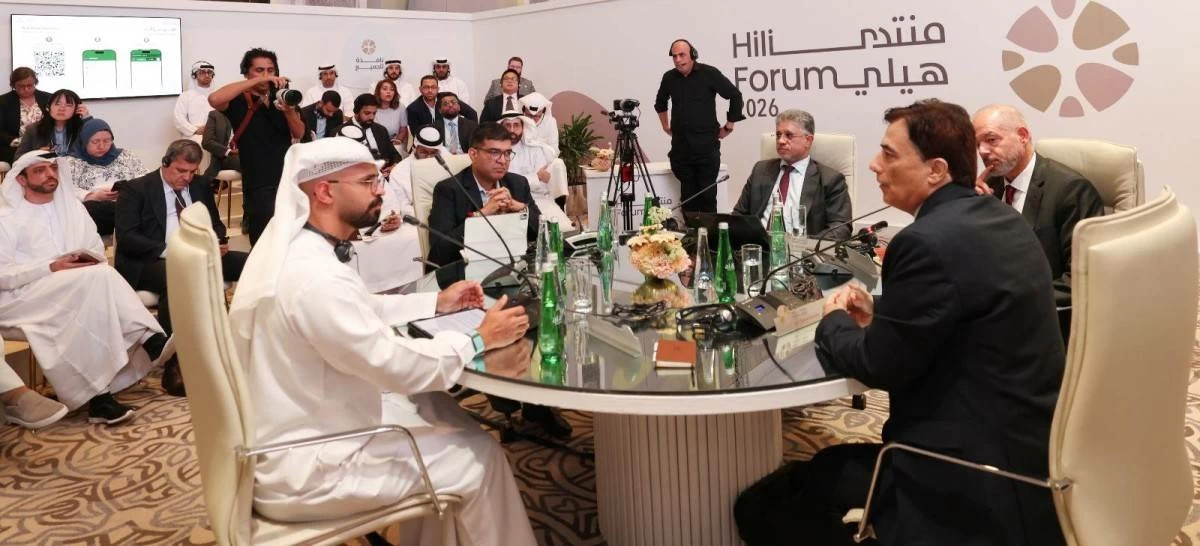
Hili Forum discusses Gulf’s growing influence on global economy
The Gulf region is undergoing a significant economic transformation, evolving into a pivotal force in the global economy. Participants at the recent Hili Forum 2026 session, titled “New Horizons: Gulf-Global Economic Cooperation,” underscored this change. As Gulf nations expand their roles beyond mere energy providers, they are now making impactful contributions in sectors such as infrastructure, technology, and global trade.
Driving Economic Diversification
Speakers at the forum emphasized a strategic shift from dependency on oil revenues to diversified economic frameworks. This transition is guided by national development strategies that prioritize growth fueled by technology, artificial intelligence, and renewable energy sources. Dr. Bassem Kamar, Executive Director of Economic Policies at the Arab Monetary Fund, remarked on the UAE’s role as a leader in financial innovation and technology adoption. He argued that these advancements position the country to enhance financial integration among the Gulf Cooperation Council (GCC) nations, fostering a more robust economic landscape.
Enhancing Trade and Connectivity
The discussion also delved into significant investments aimed at reshaping supply chains and trade routes. These efforts include upgrading ports, expanding logistics networks, and creating alternative transport corridors. Dr. Christian Pauletto, Senior Adviser at the Office of His Excellency Dr. Thani Al Zeyoudi, noted that the UAE is actively working to build economic bridges that connect it with vital commercial and financial centers across Asia, Europe, Africa, and the Americas. This strategic approach reflects a commitment to integrating the GCC and the UAE into the broader global economy, facilitating smoother trade interactions.
Energy and Food Security as Pillars of Cooperation
Energy and food security were highlighted as essential components for fostering international collaboration. Participants recognized the necessity of maintaining stable energy markets while simultaneously investing in carbon-neutral initiatives. In addition, there is a focus on building partnerships that ensure access to critical commodities such as fertilizers and agricultural products. Dr. Ahmed Al Safty, an Economic Adviser at the Emirates Center for Strategic Studies and Research, emphasized the importance of resilience. He posited that both energy producers and consumers must diversely approach current global challenges, thereby fostering closer cooperation and strategic reserves.
Forging Strategic Partnerships for the Future
Speakers indicated a move away from transactional relationships toward more profound and strategic partnerships anchored in mutual interests and innovation. Anilesh Mahajan, Senior Deputy Editor at India Today, highlighted the Comprehensive Economic Partnership Agreement between the UAE and India, which has successfully elevated bilateral trade beyond US$100 billion. This agreement serves as a framework that strengthens India’s economic ties with the Gulf and showcases how Emirati investments can be synergized with Indian capabilities, generating new avenues for growth and cooperation.
As the session wrapped up, participants collectively stressed the need for economic independence and institutional resilience amid an unpredictable global environment. They called attention to the efforts being made by Gulf countries to cultivate economies that are not only high-value but also resilient to geopolitical shocks. This focus on stability and collaboration is increasingly essential, given the interconnected nature of regional and global economic dynamics. Ultimately, the Gulf’s evolution as a key player presents a promising horizon for international cooperation and strategic partnerships that benefit all stakeholders involved.