
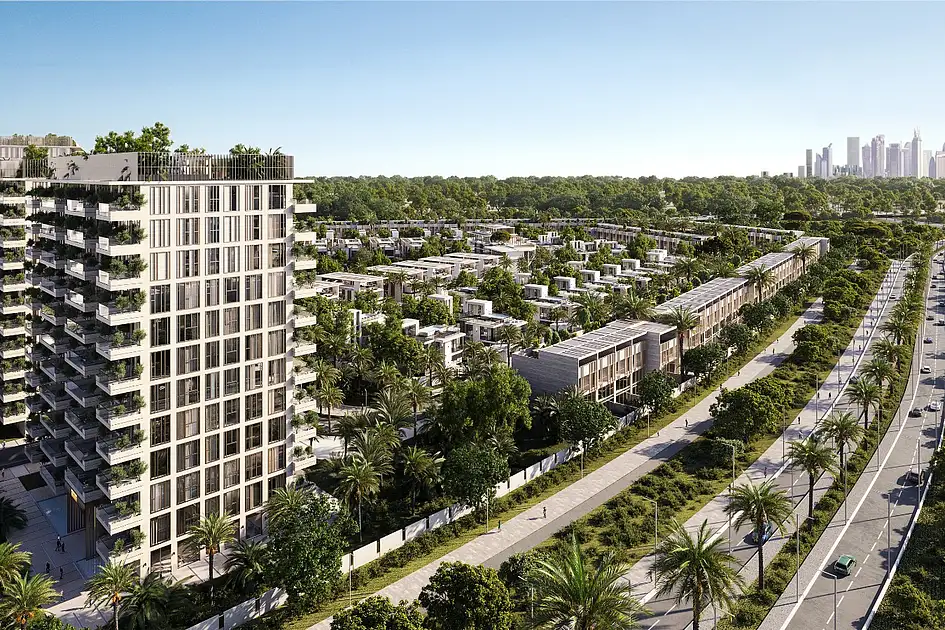
Dubai’s Wellness Real Estate Thrives Amid Rising Health Trends
Dubai’s luxury real estate sector is increasingly prioritizing health and wellbeing, driven by a rising demand for properties that promote healthier lifestyles. According to the Global Wellness Institute’s (GWI) Trends 2026 report, wellness real estate is rapidly emerging as a significant sector within the global wellness economy, expected to surpass $1 trillion by 2029.
Growth of Wellness Real Estate in the UAE
The UAE has been spotlighted as one of the fastest-expanding markets in wellness-focused real estate, with the sector’s growth escalating from $3.3 billion in 2017 to a projected $14.6 billion by 2025. Currently, wellness properties constitute more than 12% of all construction activities in the country. Additionally, there are over 555,000 wellness-centered residential units planned across the UAE and Saudi Arabia. These statistics illustrate how the demand for healthier living environments is re-shaping the property landscape in the region.
Shifting Buyer Preferences and Wellness Essentials
Market analysts observe a significant shift in buyer preferences, with wellness increasingly viewed as a fundamental requirement in residential property rather than an optional luxury. Consumers now seek environments that actively promote health and longevity, compelling developers to integrate features that enhance psychological and physical well-being. This redefined view of property value is driving the evolution of residential designs to incorporate elements that genuinely cater to health-focused living.
The GWI report highlights innovative trends in wellness architecture, including neuroarchitecture, which focuses on how elements such as light and acoustics impact our cognitive functions and mood. Additionally, primal architecture prioritizes natural materials and soothing design features to foster tranquility. There is also a growing focus on minimizing exposure to harmful substances like microplastics, steering the use of traditional construction materials like wood, stone, and wool.
The Role of Community and Walkability
Design trends increasingly emphasize walkability and community interaction as essential components of residential areas. The GWI report suggests that thoughtfully planned neighborhoods can significantly bolster residents’ mobility, independence, and overall well-being. Such designs encourage active aging and aim to create environments that support a higher quality of life for residents, making health a central aspect of community living.
Luxury developments in Dubai, such as those spearheaded by Keturah, underscore the necessity for collaborative efforts in the industry. According to Talal M. Al Gaddah, CEO and Founder of Keturah, bridging the gap between real estate professionals and public health leaders is vital. He advocates for a mindset of collaboration over competition, emphasizing that the potential of the market, paired with the government’s vision, positions Dubai as a leader in wellness-oriented real estate.
The Evolution of the Built Environment
The GWI report posits that the concept of the built environment is evolving into a vital component of health infrastructure rather than merely serving as a backdrop for daily life. This shift indicates a reassessment of residential planning and community development, moving from viewing wellness as a luxury to recognizing it as an essential element grounded in empirical evidence.
As Dubai continues to attract affluent buyers seeking lifestyle-focused investments, developers are increasingly promoting wellness as a cornerstone of long-term value. This evolving landscape reflects a broader commitment to creating healthier living spaces and preventive health approaches, positioning wellness at the forefront of the luxury real estate market in the UAE.