
Airlines’ Innovations for Easier Travel: From Headrests to Sleep Pods
Air travel has long been synonymous with cramped conditions, particularly in economy class. However, recent innovations are changing this narrative, as airlines strive to enhance passenger comfort without significantly increasing costs. With options ranging from customizable headrests to extra legroom, the aviation industry is gradually transforming the passenger experience on long-haul flights.
Innovative Aircraft Design Enhancements
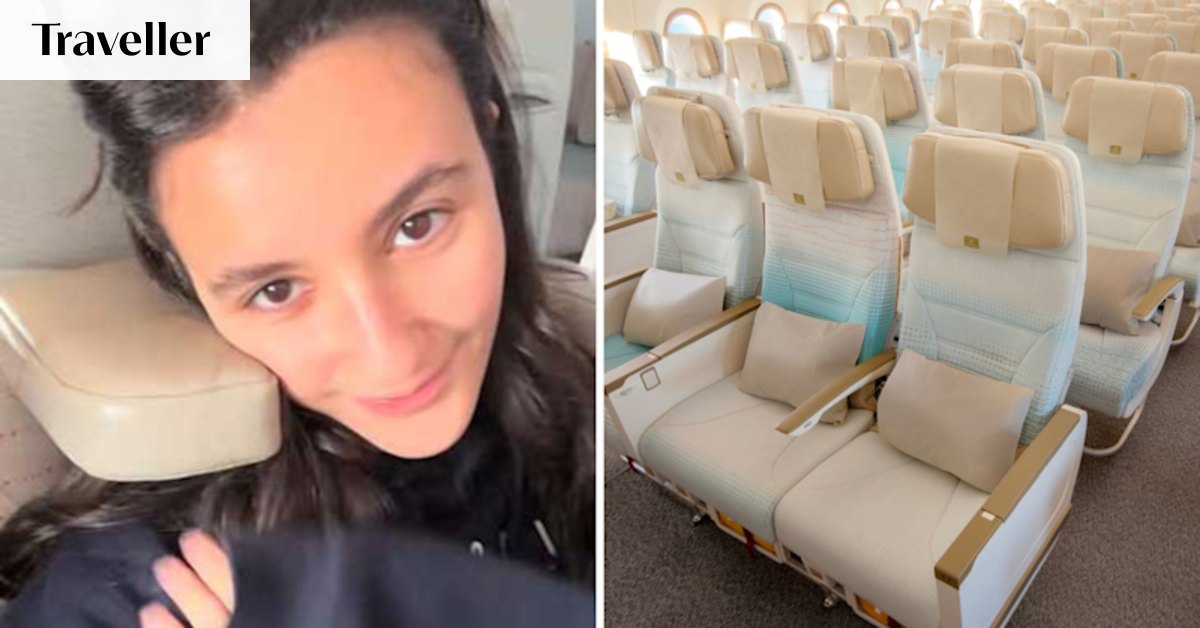
Airlines like Emirates are making headlines by introducing advanced seating features in economy class. For instance, Emirates recently showcased a uniquely designed headrest that can adjust in height and angle, providing a more natural neck support than traditional designs. Unlike standard headrests that fold in, this new model forms a horseshoe shape, offering enhanced comfort that echoes the ease of a neck pillow but with a firmer structure. Social media buzz around this headrest reflects a growing desire for innovation in economy seating options.
Other airlines are equally active in enhancing comfort. Air New Zealand’s Skycouch allows families to book an entire row with a special sleeping surface, creating a makeshift bed. This concept is being mirrored by other carriers, demonstrating a broader trend where additional comfort in the economy section is becoming a selling point.
The Importance of Seat Pitch
When evaluating comfort in economy flights, one of the most critical factors is seat pitch—essentially the distance between seats. This measure significantly influences legroom and overall passenger comfort. Unfortunately, increasing seat pitch often results in higher ticket prices, a situation many airlines shy away from as they focus on maintaining competitive pricing for budget-conscious travelers. Yet, some airlines, particularly those based in Asia, are showing potential with more generous seat pitch options. For instance, Japanese Airlines (JAL) and All Nippon Airways (ANA) are known for providing seat pitches of 84-86 centimeters, making them some of the more comfortable choices for long-haul flights.
While some airlines have started offering additional legroom or extra-comfort options at an added cost, these features are limited. Budget airlines like Scoot and AirAsia X have even introduced quiet cabins, a concept that, although popular, isn’t widely adopted. Nevertheless, innovations are frequently tested, including shell-type seats that recline differently and Wi-Fi access for all passengers, marking a shift in how airlines cater to their economy class clients.
Future Trends and Failed Innovations
Despite the efforts to enhance economy seating, not all innovations have succeeded. Ideas such as saddle seats aimed at cramming in more passengers never materialized. Similarly, double-decker seating concepts have been discarded due to safety concerns. Yet, ideas continue to swirl in aviation circles, including proposals for a passenger sleeping module in the cargo hold and detachable cabin pods designed to improve turnaround times for flights.
Airlines continue to explore new ways to attract travelers and enhance their flying experience. While drastic changes may take time, the trend towards more comfortable economy class experiences is undeniable. As airlines balance the need for affordability against the demand for comfort, travelers can look forward to gradual improvements in how they experience long-haul journeys.
Overall, while traveling in economy may never equate to the luxury of business class, the current advances and innovations indicate a promising shift towards greater passenger comfort in the skies.