
Tax Enhances Transparency and Sustainability in UAE Economy, ICAI Officials Affirm
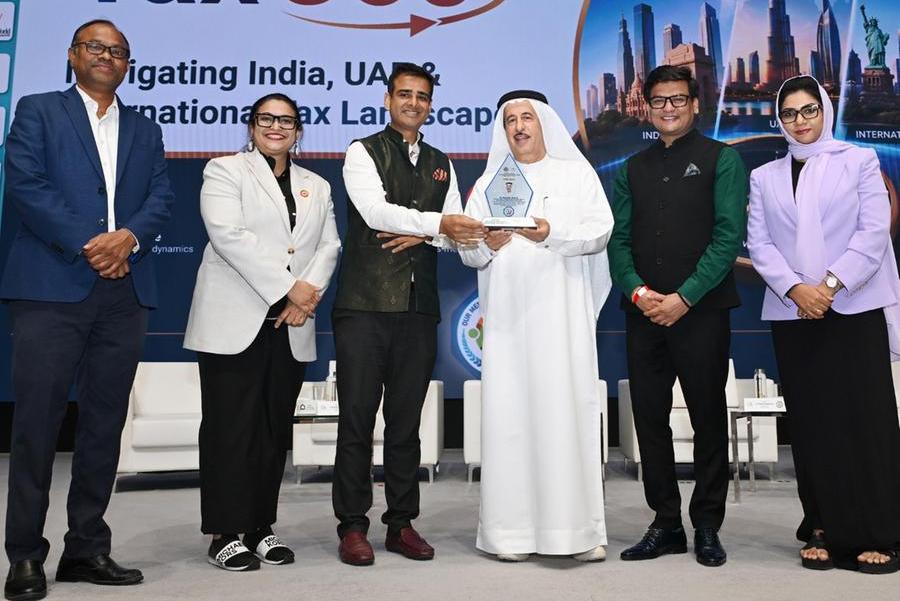
Dubai is rapidly evolving its economic landscape, with a focus on transparency and sustainability in taxation. During the recent “Tax 360° – Navigating India, UAE & International Tax Landscapes Conference,” hosted by the Dubai Chapter of the Institute of Chartered Accountants of India (ICAI), over 300 accounting professionals gathered to explore these developments. The discussions highlighted how this new approach to taxation is not only beneficial for businesses but is also reshaping the broader economic environment in the UAE.
The Transformation of Taxation in the UAE
Abdulqadir Obeid Ali, Chairman of the UAE Internal Auditors’ Association, emphasized the significant shift in perspective surrounding taxes in the UAE. “A decade ago, tax was rarely discussed in the UAE. Today, we are entrenched in a tax environment that fosters transparency, integrity, and good governance. Taxation is essential for business growth and overall economic health,” he noted. This shift reflects a broader global trend, reinforcing that well-structured tax systems can be advantageous for sustainable economic development.
Among the discussions, CA Rishi Chawla, Chairman of the Dubai Chapter of ICAI, pointed out that there are notable parallels between the tax structures of both the UAE and India. He detailed how India’s Income Tax system is evolving alongside its economic aspirations. Chawla remarked, “The focus is moving away from mere enforcement to facilitating taxpayer compliance, driven increasingly by technology and transparency.” As businesses adapt to these transformations, the tax framework is set to play a pivotal role in supporting economic growth and attracting investment.
Understanding Recent Developments in Indian Taxation
In India, the financial year 2024-25 marked a significant milestone where personal income tax collections surpassed corporate tax for the first time, reaching INR 11.56 trillion compared to INR 10.42 trillion in corporate taxes. This change signifies a robust shift in economic dynamics, illustrating the increasing number of individuals contributing to the tax base. The figures indicate that the government’s efforts in streamlining tax processes are paying off.
Dr. Dharm Singh Meena, IRS First Secretary at the Embassy of India, discussed the UAE-India economic partnership, noting that bilateral trade has exceeded USD 100 billion. He highlighted that both nations are adopting more transparent taxes, fostering strategic partnerships, and simplifying tax structures. The introduction of the Personal Income Tax Act 2025 is expected to further streamline tax filing procedures for professionals in India, cutting down complexity and improving compliance.
The Role of Artificial Intelligence in Taxation
As businesses continue to navigate these changes, leaders like CA Neeraj Teckchandani, CEO of Apparel Group, stress the importance of integrating Artificial Intelligence (AI) into operations. “We have invested in technology across various business segments, transitioning from traditional e-commerce to AI-commerce,” he stated. This integration ensures that companies can operate smarter and more efficiently, especially during challenging times.
The ICAI plays a crucial role in promoting high standards in accounting and taxation, with a global membership exceeding 450,000 professionals. The Dubai Chapter stands out as the largest and most active among ICAI’s international chapters, representing a significant stakeholder in the region’s economic landscape. It emphasizes continuous professional development, fostering a network that spans multiple sectors, and contributes to shaping the evolving narrative around taxation in both the UAE and India.
The shift towards a more transparent and simplified tax system in both the UAE and India is a promising development for businesses and professionals alike. By staying informed on these changes, stakeholders can effectively navigate this dynamic landscape, ensuring compliance and contributing to the sustainability and growth of their respective economies.