
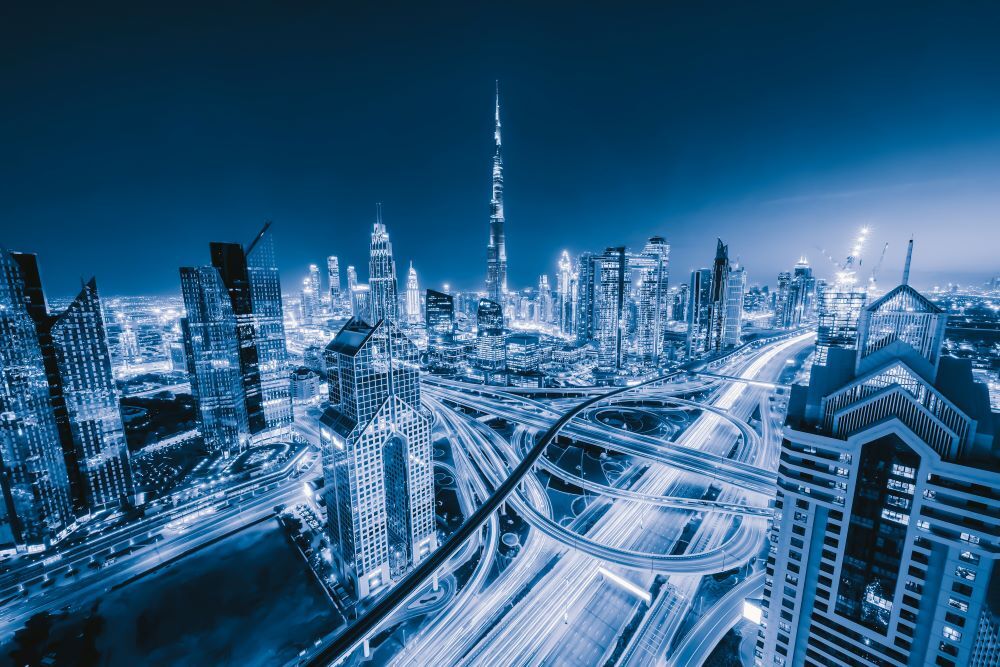
The Smart Forces Shaping Our Daily Lives
Dubai’s evolution into a smart city transcends mere technological advancements; it’s about enhancing the quality of urban life. The true achievement lies in minimizing everyday hassles and creating seamless interactions within the city. This transition reflects a holistic approach where the focus is not just on the latest gadgets but on improving citizens’ everyday experiences.
A City Designed for Digital Ease
Dubai’s smart city transformation primarily focuses on government services. Over the last decade, the city has successfully transitioned from traditional paper-based administration to a more efficient digital-first environment, allowing residents to complete crucial transactions via their smartphones. This digital shift encompasses everything from residency documentation to utility payments and vehicle services. By integrating these services into a cohesive digital interface, residents benefit from fewer bureaucratic hurdles, saving them time and energy. This not only streamlines data management but also enhances the efficiency of public services, ensuring the city can keep pace with its rapid growth.
At the heart of this digital ease is the DubaiNow application, which centralizes numerous services, making them readily accessible. Coupled with the UAE Pass, which provides secure digital identity verification, these innovations have transformed interactions with the government into a more intuitive and efficient experience that feels almost like a public utility.
The Impact of Going Paperless
One of the major milestones in Dubai’s smart city blueprint is the elimination of paper from governmental processes. This shift not only modernizes administrative mechanics but also significantly alters the public service landscape. While the environmental benefits are noteworthy, the operational efficiencies gained through a paperless approach are far-reaching. It minimizes redundancy, curtails delays, and promotes collaboration among various government entities.
For a city that thrives on international business and mobility, streamlined digital governance is essential. Dubai’s ability to facilitate smooth living conditions, investment opportunities, and effective document management enhances its appeal as a global hub. Therefore, digital governance is not just an added feature; it forms a crucial element of the city’s economic framework.
Smart Mobility and Urban Transportation
A city’s intelligence is often most apparent in its public transportation systems. Dubai’s mobility strategy is anchored in innovative technologies, automation, and sustainability. The implementation of the driverless Dubai Metro and smart traffic management systems exemplifies this focus. The objective is not solely to introduce futuristic transport solutions but to create an adaptable network that addresses urban growth, alleviates congestion, and boosts safety.
Advanced traffic systems equipped with real-time monitoring capabilities and AI-driven management enable the city to anticipate and respond effectively to transportation needs. Furthermore, initiatives such as autonomous taxis and smart public transport systems promise to redefine urban mobility, contributing to a more efficient transit framework that caters to the demands of a growing population.
Data as the Backbone of Urban Life
In Dubai, data is regarded as a critical component of infrastructure, seamlessly integrating information from various sectors to enhance urban management. This connectivity permits a comprehensive analysis of data across transport, utilities, public safety, and more, leading to improved service delivery and informed decision-making.
For citizens, this translates into faster services and a more reliable environment for daily activities. Businesses stand to benefit from a predictable ecosystem that fosters growth and efficiency. As different sectors generate valuable data, their integration enables Dubai to identify trends, forecast demand, and make actionable insights a reality.
In conclusion, Dubai’s smart city transformation is more than a series of technological upgrades; it represents an ongoing commitment to creating a more livable and efficient urban space. By prioritizing digital convenience, eliminating bureaucratic inefficiencies, and harnessing the power of data, Dubai is setting a benchmark in urban living that other cities might aspire to emulate.