
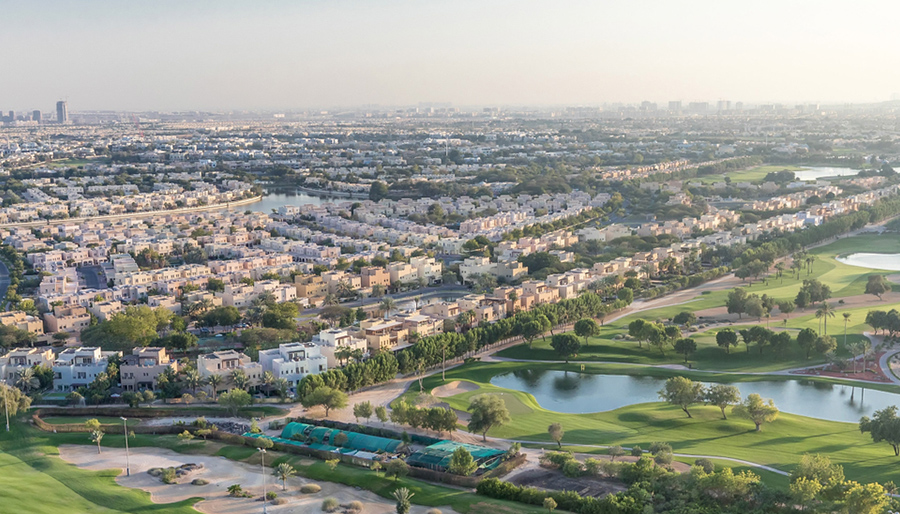
Dubai real estate values decline for the second month in a row due to regional instability
The Dubai real estate market is currently experiencing a notable shift. After years of consistent growth, the residential property sector saw a decline in value for the second consecutive month in April, though the rate of this decrease has slowed compared to the previous month. Recent analyses from ValuStrat shed light on these developments and the factors influencing the market’s performance.
Current Market Trends in Dubai
Dubai’s real estate landscape has witnessed remarkable growth over the past few years, supported by numerous factors such as a robust economy, appeal to expatriates, significant international investments, rapid population increases, and favorable residency reforms. For 2021 onwards, data from the ValuStrat Price Index (VPI) shows a persistent rise in average property prices across various segments, particularly in luxury and villa categories which experienced steep price hikes.
As we enter 2026, however, the market appears to be cooling for the first time since the rapid growth started. ValuStrat had predicted this natural correction earlier in the year, suggesting that the market was due for a return to more sustainable growth patterns after several years of intense appreciation. This adjustment aligns with the introduction of new properties, particularly in the apartment segment, which adds supply to the market.
Geopolitical Influences on Investor Sentiment
Compounding the situation is an increased feeling of uncertainty stemming from regional geopolitical tensions, particularly following recent conflicts in Iran. This instability has affected investor confidence, leading to a decrease in transaction volumes. Buyers are becoming more cautious and price-sensitive, affecting decision-making in the property market substantially.
ValuStrat’s findings reveal that both villa and apartment capital values declined in March and April. Villas saw a monthly price drop of 1.7% in April, following a larger decline in March, while apartment values dropped by 6.3% in March before settling at a 2.2% drop in April. The ValuStrat Price Index subsequently fell to 224.9 points, representing a 5.9% decline in March and a further 1.9% decrease in April. Nevertheless, property prices remain higher than at the start of the year, owing to strong appreciation witnessed in the first two months of 2026.
Market Outlook and Transaction Trends
In recent months, villa transactions have focused on prime areas like Jumeirah Islands, The Meadows, and Palm Jumeirah, while the apartment market has been most active in locations such as Dubai Silicon Oasis and Dubai International Financial Centre. According to ValuStrat, while the market is not losing momentum completely, it is transitioning into a more mature phase that may offer selective opportunities. Projects anchored in solid fundamentals, lifestyle desirability, and sustainable demand are expected to thrive.
While concerns about a potential market crash have surfaced, most experts currently interpret the recent downturn as a temporary adjustment instigated by external factors combined with an anticipated normalization of market conditions. At its core, Dubai’s property market remains bolstered by strong underlying drivers, including population growth, steady international interest, and a favorable business climate, all heralding continued interest from high-net-worth individuals and investors alike.
Although the future trajectories of capital values remain speculative, previous research by ValuStrat has indicated robust fundamentals that support long-term growth in Dubai’s residential real estate sector. The market’s ability to adapt and stabilize in the face of current challenges will be crucial for its sustained prosperity in the years to come.