
Assessing the Gulf States’ Economic Impact from the Iran War
The conflict involving the U.S. and Israel against Iran has significantly impacted the Gulf region, particularly the economies of the Gulf Cooperation Council (GCC) members—Bahrain, Kuwait, Oman, Qatar, the UAE, and Saudi Arabia. As the conflict escalated, it has become increasingly challenging for these countries to maintain economic stability, with forecasts indicating severe repercussions for growth.
Economic Pressure in the Gulf Region
The World Bank has revised its GDP growth projections for the GCC for 2026 from an optimistic 4.4% down to just 1.3%. Several analysts, including those from Oxford Economics, believe that certain GCC nations may even slip into recession during the latter half of the year. This downturn suggests a deepening economic crisis, highlighting the region’s vulnerability to geopolitical tensions.
While the GCC is commonly perceived as a singular economic entity due to its heavy reliance on oil and gas, varying levels of resilience and susceptibility have become apparent among its members. Countries such as Qatar and Kuwait have faced severe disruptions in their oil and gas exports due to the effective blockade of the Strait of Hormuz. Conversely, nations like Saudi Arabia and the UAE have successfully utilized alternative infrastructure to continue exporting crude oil, avoiding some of the most damaging immediate effects of the conflict.
Saudi Arabia has managed to reroute 7 million barrels of crude oil daily via its east-west pipeline, enabling exports from Yanbu on the Red Sea. The UAE has similarly found ways to maintain its oil output by using the Habshan-Fujairah pipeline to export approximately 1.8 million barrels daily from the Gulf of Oman. These adaptations have allowed both countries to benefit from the currently soaring global oil prices, as evidenced by Saudi Aramco’s reported 26% increase in profits in early 2026.
Infrastructure Damage and Economic Diversification
The conflict has not only disrupted energy exports but has inflicted substantial damage to energy infrastructure across the GCC. About 80 energy facilities, including refineries and pipelines, have been attacked by Iranian missiles and drones, resulting in repair costs estimated at around $58 billion. Qatar’s liquefied natural gas sector has been particularly hard-hit, with QatarEnergy projecting that repairs to the Ras Laffan industrial hub alone could take up to five years.
In response to ongoing geopolitical challenges, GCC countries have aimed to diversify their economies beyond oil. Tourism and aviation are pivotal sectors in this strategy. However, the war has severely impacted these areas as well. For instance, hotel occupancy rates in Dubai are expected to plummet from 80% to just 10% in the second quarter of 2026 due to conflicts affecting civilian infrastructure and deterring tourism.
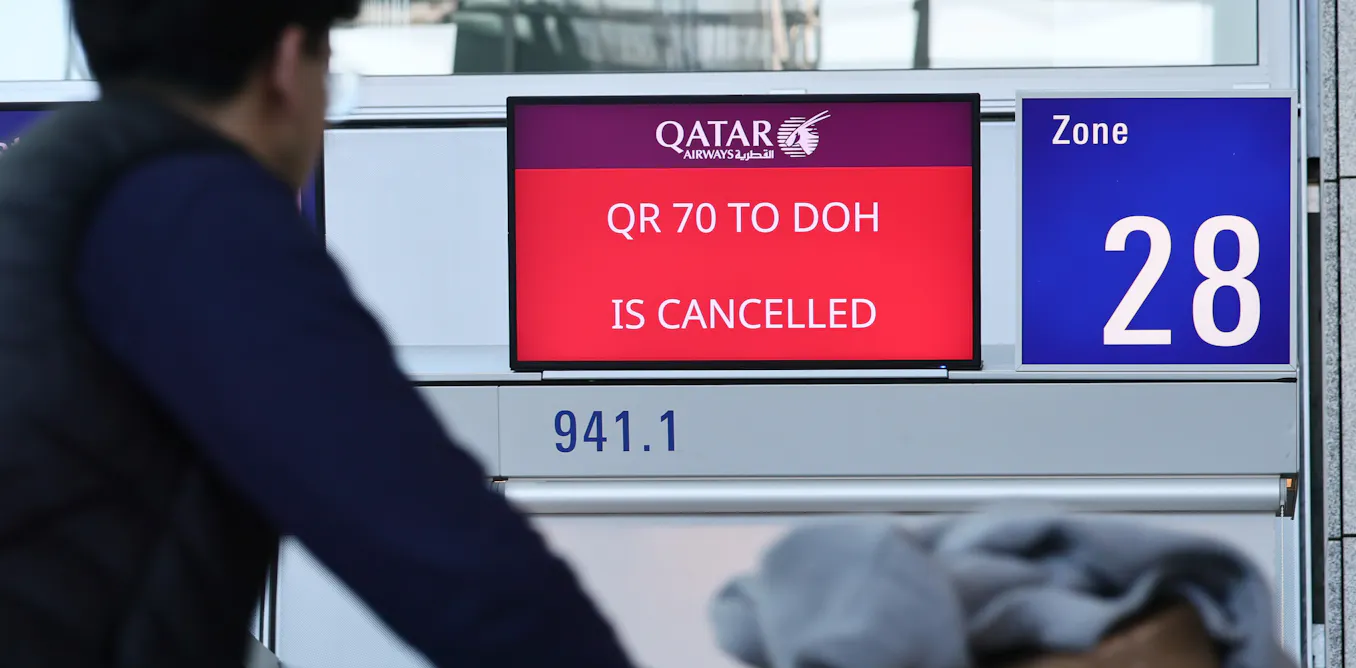
Gulf airlines like Emirates, Etihad, and Qatar Airways are grappling with financial strain as more than 30,000 flights to the Middle East were canceled in the first month of the war. Concurrently, increased jet fuel prices—rising by 90% compared to average rates in the previous year—complicate their operational viability.
Long-Term Implications for the GCC Economies
As the war continues, the long-term economic repercussions for the Gulf nations will largely depend on the conflict’s duration and outcome. Several GCC states face unsustainable fiscal scenarios where government spending may exceed revenues, leading to an increase in public debt. Credit rating agency Moody’s has notably changed its outlook for Bahrain from “stable” to “negative,” indicating potential challenges in securing necessary capital in the future.
The GCC nations have historically relied on sovereign wealth funds, which collectively manage assets between $4 trillion and $6 trillion, to invest surplus oil revenue. However, the necessity to allocate these funds for immediate domestic needs, such as reconstruction and defense, may compromise their capacity to finance long-term diversification projects, including ambitious plans like Saudi Arabia’s Neom City.
The war has tarnished the Gulf’s reputation as a “safe haven,” and this damage will be difficult to reverse. Even upon the conflict’s resolution, higher risk premiums will likely hinder business operations in the region. Shipping disruptions may linger for months, and any prolonged closure of the Strait of Hormuz could lead to lasting shifts in global supply chains, deepening the economic strain on Gulf nations and reshaping the region’s economic landscape for the foreseeable future.