
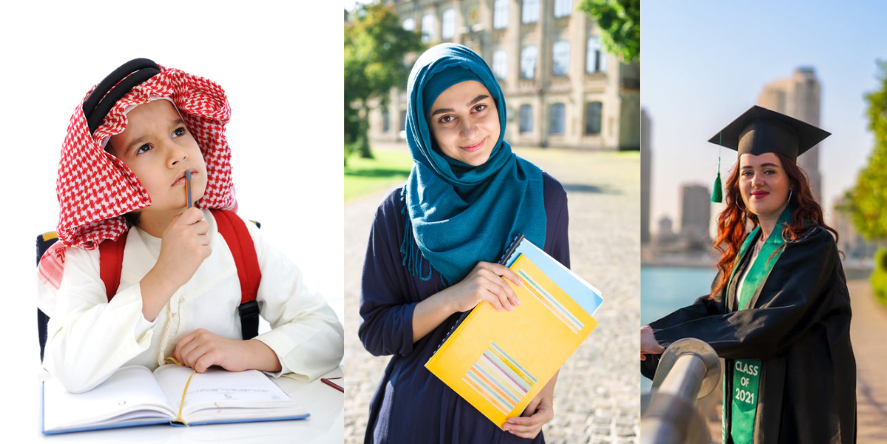
Innovative Education in the UAE: Blending Tradition and Progress
The evolution of higher education in the UAE is a narrative filled with aspirations, innovation, and international cooperation. Over a short span, the nation has developed a robust educational framework that not only serves its citizens but also draws students from around the globe. The vibrant campuses in Abu Dhabi, Dubai, Sharjah, and Al Ain embody a blend of traditional values and modern approaches, with local universities complementing esteemed international institutions to create a dynamic knowledge ecosystem.
The Foundations of UAE Higher Education
The tapestry of higher education in the Emirates is richly woven with its flagship institutions. The United Arab Emirates University, established in 1976 in Al Ain, stands as a pillar of Emirati academia. Offering diverse programs in fields such as medicine, engineering, humanities, and commerce, it symbolizes the country’s commitment to fostering intellectual growth. Khalifa University in Abu Dhabi focuses on cutting-edge fields like engineering, artificial intelligence, and robotics, aligning with the UAE’s goal of leadership in innovation. The University of Sharjah and Zayed University further enhance this landscape by providing strong curricula in life sciences and business management. Meanwhile, the Mohammed Bin Rashid University of Medicine and Health Sciences in Dubai has quickly emerged as a center for medical education and research, reflecting the country’s ambitions in healthcare.
Global Collaborations in Education
The higher education narrative of the UAE extends beyond its local institutions, as it has successfully attracted some of the world’s leading universities to establish campuses within its borders. New York University Abu Dhabi exemplifies a global liberal arts education, merging disciplines like humanities and social sciences with innovative research. Sorbonne University Abu Dhabi brings French academic traditions to the region, offering programs in law and humanities. Similarly, institutions like Heriot-Watt University and the University of Birmingham in Dubai focus on business and engineering excellence, while the Rochester Institute of Technology Dubai specializes in technology and computing. Manipal Academy of Higher Education also adds value by providing courses in fields such as medicine and engineering, showcasing the UAE’s commitment to a diverse educational landscape.
A Balanced Academic Ecosystem
The breadth of academic disciplines offered across UAE universities aligns seamlessly with the country’s strategic national priorities. Areas like technology and AI take center stage, with institutions like Khalifa University and RIT Dubai leading research in autonomous systems and robotics. Meanwhile, medicine and life sciences are significant, with Mohammed Bin Rashid University and the University of Sharjah focusing on cultivating expertise in line with the UAE’s vision of becoming a global healthcare hub. Although less prominent, defense studies are integrated into Khalifa University’s aerospace and security research, emphasizing national resilience. Additionally, the programs of Zayed University, Heriot-Watt, and Birmingham Dubai enhance commerce and management education, preparing students for impactful roles in a globalized economy.
Local and International Perspectives
What distinguishes the UAE’s higher education landscape is its unique blend of local and global perspectives. Emirati students engage with peers from Asia, Europe, Africa, and beyond, creating classrooms that reflect the nation’s cultural diversity. Faculty members hail from various global backgrounds, bringing a wealth of expertise that enriches the academic experience. This international dimension enables students to gain insights into cross-cultural issues and prepares them for careers that extend well beyond regional boundaries. The UAE’s higher education system does not merely focus on traditional learning; it emphasizes interdisciplinary collaboration, equipping students to tackle complex global challenges.
In conclusion, the story of higher education in the UAE is one of vision and progress. Recognizing that mere reliance on natural resources could not secure a sustainable future, the nation has prioritized knowledge, innovation, and human capital development. By creating a diverse array of institutions and inviting esteemed global partners into its educational journey, the UAE has established itself as a burgeoning academic hub. This landscape fosters critical thinking and innovation, positioning the UAE as not just a consumer of knowledge but as a proactive contributor to global academic discourse. The future looks promising, as the UAE continues to shape itself into a leading center of higher learning.