
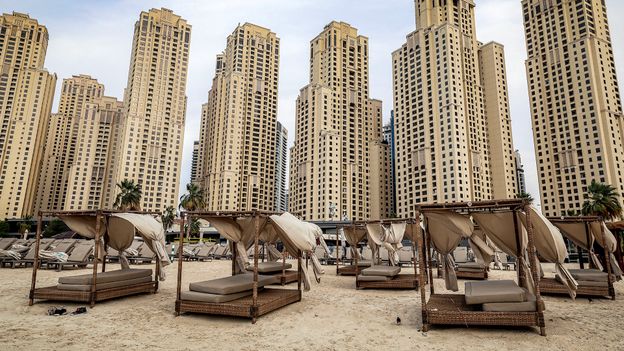
Dubai’s tourism sector shook by war’s severe effects.
The ongoing conflict between the US, Israel, and Iran has significantly affected tourism in Dubai, causing considerable strain on local businesses that depend heavily on international visitors. This article will explore the ramifications of these geopolitical tensions and how they have altered the economic landscape in one of the world’s most vibrant tourist destinations.
Impact on Tourism
Dubai has long been recognized as a prime tourist destination, attracting millions of visitors annually. However, the recent escalation of tensions due to the US-Israel-Iran conflict has led to a notable decline in visitors. Many potential tourists are now hesitant to travel to the region, fearing safety risks or political instability. This reduction in foot traffic has resulted in lower occupancy rates in hotels, diminished attendance at attractions, and a sharp decline in sales for many local businesses that rely on tourism.
Consequences for Local Businesses
As tourism begins to dwindle, a ripple effect is being felt across various sectors in Dubai. Restaurants, shops, and entertainment venues are experiencing significant revenue drops. Local business owners are having to make difficult decisions, such as reducing employee hours or, in some cases, laying off staff. The knock-on effects might lead to long-term economic repercussions, impairing the fabric of a city that thrives on diversity and vibrancy brought by global visitors.
Potential Recovery Strategies
In light of these challenges, many businesses are exploring creative recovery strategies to adapt to the changing landscape. Some are focusing on attracting domestic tourists, offering special promotions to local residents to encourage spending. Others are investing in online marketing campaigns targeting international audiences with an emphasis on safety and security measures in place. Such strategies aim not only to revive the tourism sector but to reassure potential visitors that Dubai remains a safe and welcoming destination despite the geopolitical turmoil.
Looking Ahead
The road to recovery will undoubtedly be complex, as the situation remains fluid. However, businesses and policymakers in Dubai can take proactive steps to mitigate the negative impacts of the ongoing conflict. Building partnerships with international organizations and focusing on regional stability may help reassure tourists. Additionally, enhancing Dubai’s appeal through unique cultural offerings and events could recapture the interest of travelers looking for something extraordinary.
In conclusion, the US-Israel-Iran conflict has undeniably cast a shadow over Dubai’s tourism industry, affecting local businesses and the economy. While the challenges are significant, a combination of innovative strategies and community resilience may pave the way for recovery. For Dubai to continue to thrive as a global tourist hub, it will require collaboration and adaptation in an ever-changing geopolitical landscape.