
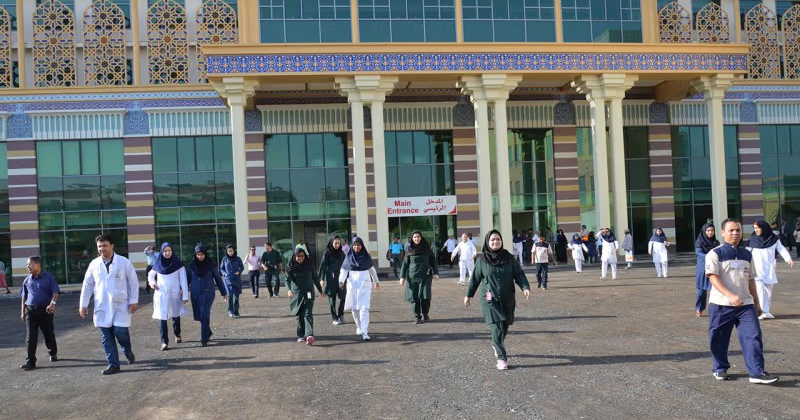
Iranian hospital workers leave Dubai housing following UAE directive.
The ongoing conflict between the United States and Iran has escalated recently, raising concerns over regional stability and civilian safety. In a recent interview, Admiral Brad Cooper provided insights on Iran’s military tactics and strategies, highlighting a noticeable shift in their approach as the conflict drags on.
Targeting Civilians: A Desperate Strategy
Admiral Cooper described the recent surge in attacks on civilian targets by Iranian forces as emblematic of their desperation. He noted that there have been over 300 intentional attacks against such targets in just a matter of weeks. Initially, Iran’s military operated with larger volumes of drone and missile attacks, launching them in groups. However, this has recently shifted to a more isolated approach, with attacks being limited to just one or two drones or missiles at a time. Despite calls from Iranian officials claiming that their military capabilities remain intact, the evidence suggests a different narrative, with diminishing capacity to conduct large-scale operations.
Indeed, the severity of these attacks has escalated to unprecedented levels, as evidenced by a recent offensive targeting Israeli towns like Arad and Dimona. Israeli authorities reported numerous injuries resulting from this onslaught, illustrating the growing volatility in the region. Iranian leaders have vowed to maintain a prolonged conflict, yet the increasing frequency of their attacks may reflect underlying weaknesses in their strategic capabilities.
Shipping Lanes and Military Operations
The Strait of Hormuz is a critical maritime corridor, through which about 20% of the world’s oil passes. Cooper emphasized the United States and its allies’ efforts to secure these shipping lanes against Iranian naval threats. Since the start of their campaign, coalition forces have reportedly sunk or severely damaged around 140 Iranian vessels, marking a significant reduction in Iran’s naval power. Admiral Cooper also noted that while the Strait remains open for transit, the ongoing attacks from Islamic Republic forces using drones and missiles are dissuading ships from passing through.
The potential for escalation is underscored by U.S. President Donald Trump’s warnings of possible military action against Iran’s power plants if the country does not allow safe transit through these waters. In response, Iranian officials have threatened retaliation, warning that such moves could prompt comprehensive attacks on regional energy and water infrastructures. This tit-for-tat rhetoric raises the stakes further and underscores the precarious state of affairs.
Regional Defense and Future Threats
Cooper also discussed the broader implications of the ongoing military operations, indicating that the U.S. and allied forces are advancing faster than anticipated in disrupting Iran’s military assets. He asserted the necessity of dismantling not only existing threats, such as drones and missiles, but also eliminating future capabilities that could pose risks. This proactive strategy serves as a deterrent against Iran’s potential expansion of its military reach across the region.
Furthermore, he highlighted the unprecedented air defense measures undertaken in the Middle East, which have created a “thick defensive umbrella” over many nations. Israel’s proactive role in neutralizing Iranian threats has been instrumental, especially in targeting drones and ballistic missiles aimed at neighboring countries. This collaborative defense is crucial in maintaining stability while responding to Iran’s provocations.
In conclusion, the ongoing conflict between the United States and Iran reveals a complex interplay of military tactics, regional security, and civilian impact. While Iranian officials assert their capability to sustain a prolonged conflict, the evolving dynamics suggest otherwise. As both sides navigate this treacherous landscape, the hope remains for a swift resolution that prioritizes the safety of civilians and regional stability.