
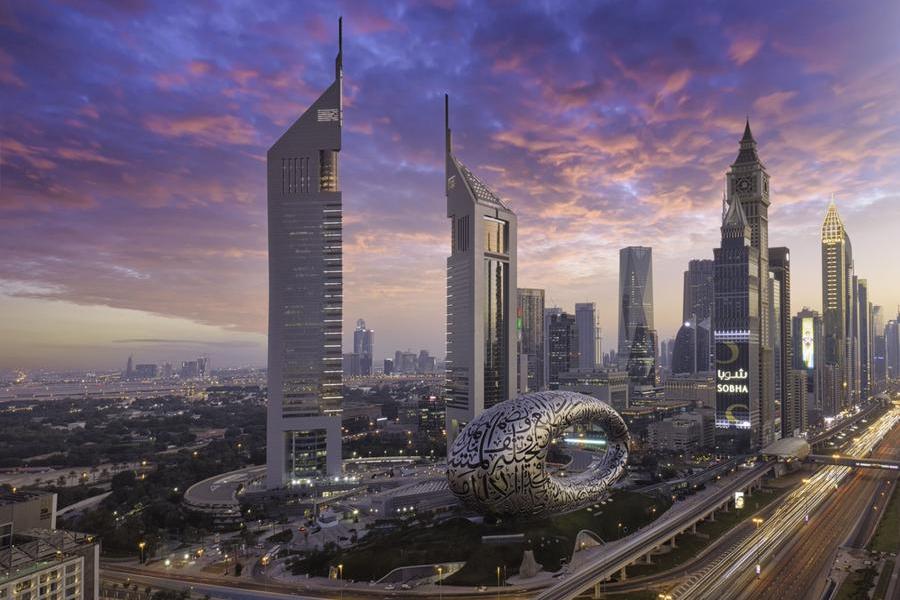
Business council leaders emphasize Dubai’s resilience and investor trust amid global changes.
Dubai: A Global Model of Resilience and Agility
Dubai’s business landscape has drawn significant acclaim, with numerous country business councils affirming the emirate’s role as a global benchmark for resilience amid changing international dynamics. The city’s robust economic framework, characterized by forward-thinking leadership and a focus on the public-private partnership, underpins this resilience.
Integrated Economic Framework
Business leaders underscore the importance of Dubai’s integrated economic model, which effectively meshes proactive government policies with a welcoming stance towards trade and investment. This synergy fosters a diversified economy and advanced infrastructure, reinforcing global confidence in the emirate’s capacity to turn obstacles into growth opportunities. The commitment to transparent government communication and active engagement with the private sector enhances trust and collaboration, vital elements for maintaining a stable business environment.
Siddharth Balachandran of the Indian Business & Professional Council emphasizes that the emirate’s long-term vision, coupled with efficient execution, has ensured sustained economic growth and stability. Investment confidence remains high, evidenced by recent significant investments made in various sectors. Balachandran notes that Dubai’s distinguishing factor is not just in crafting policies but in the substantial emphasis placed on their implementation and regular monitoring. This proactive approach bolsters trust and assurance amongst investors.
Proactive Government Policies
Business councils, including those representing Indian, Turkish, and Malaysian interests, agree that Dubai’s resilient economic framework rests heavily on the adaptable and innovative policies established by its leadership. Katy Keenan from the British Chamber of Commerce highlights the vital role of sector-specific Business Groups initiated by the Dubai Chamber, which serve as effective conduits for the business community’s voice. These efforts reinforce the emirate’s capacity to navigate challenges, particularly during times of regional instability.
Kanat Kutluk from the Turkish Business Council notes that Dubai has adeptly adapted to global transformations while maintaining a commanding economic momentum. The emirate’s diverse economy and open trade relationships create a favorable environment for international businesses, facilitating confidence even in uncertain times.
A Culture of Collaboration and Strength
Fahmy Ansara Dahalan of the Malaysian Business Council speaks to the collaboration between public and private sectors as a key driver of Dubai’s success. By fostering an environment of responsibility and engagement, residents and businesses alike are encouraged to contribute actively to the emirate’s economic growth. This partnership-based model is reflective of a united vision where everyone plays a role in steering Dubai toward a prosperous future.
Further reinforcing this narrative, Peggy Scherpenberg of the Belgian Business Council asserts that Dubai’s ability to recover from challenges is a testament to its strong institutional framework. The rapid response of entities like Emirates showcases the emirate’s agility in adapting operations to ensure that business continuity is upheld, revealing a proactive mindset that fuels sustained growth.
In light of global uncertainties, leaders across various country councils believe that Dubai’s integration of strategic policies and infrastructure ensures that the emirate remains a beacon of stability and innovation. This adaptability not only secures a favorable climate for international business but also fortifies Dubai’s position as one of the world’s most appealing hubs for trade and investment, demonstrating its long-term potential to thrive in the face of adversity.