
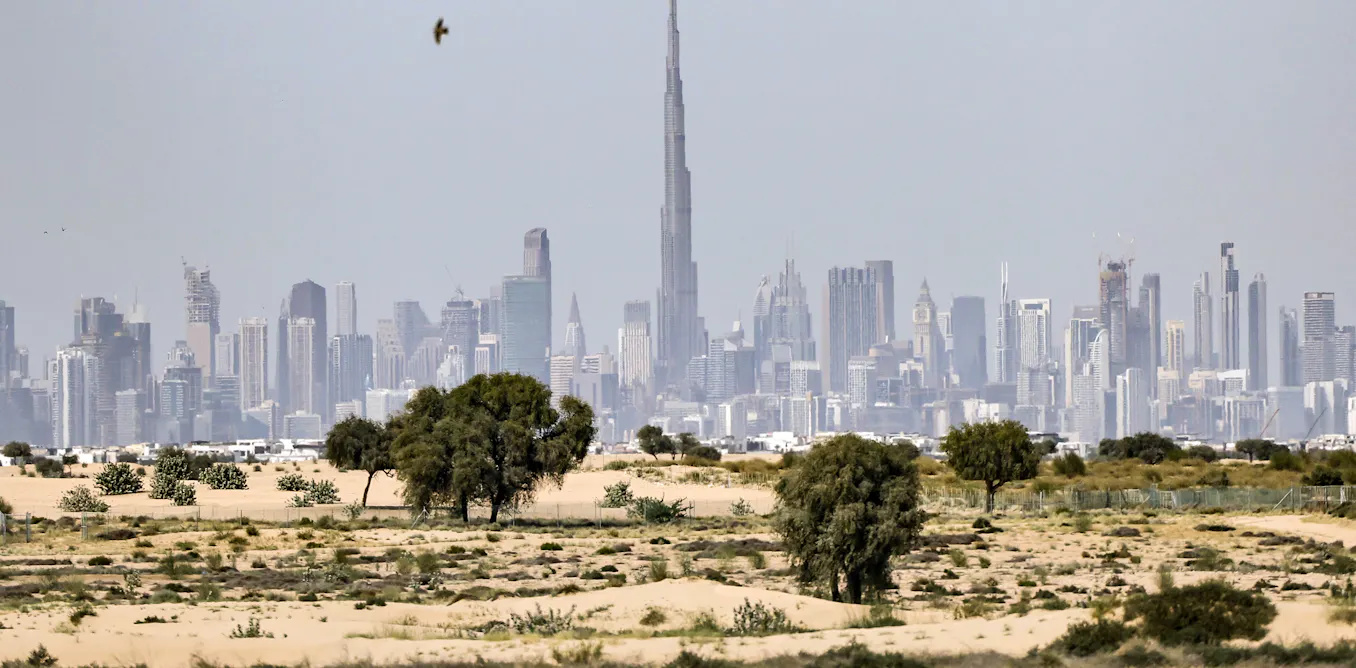
Can Dubai’s Real Estate Brand Endure Amidst Conflict?
Dubai, once a modest fishing and pearling community, has transformed into a vital financial, commercial, and tourism center in the Middle East. Today, it ranks as the second-largest emirate within the United Arab Emirates (UAE), following Abu Dhabi. For decades, Dubai has built its economic prosperity on the promise of stability, branding itself as a sanctuary for global elites amid regional turmoil. However, the ongoing conflicts involving the United States, Israel, and Iran pose a significant challenge to its reputation as a safe haven.
The Importance of Real Estate in Dubai’s Economy
Real estate development stands as a cornerstone of Dubai’s impressive economic growth, contributing around 15% to the emirate’s gross domestic product (GDP). The city has quickly emerged as a prime destination for foreign real estate investors, attracted by high rental yields, favorable tax regulations, and an open property market. Notably, opportunities to gain residency in the UAE through property investments add to its allure.
In 2022, foreign investment in Dubai’s real estate sector accounted for roughly a quarter of the UAE’s overall foreign investment. Key contributors include countries like India, the United Kingdom, Pakistan, Saudi Arabia, and Iran. For instance, Australian investors owned nearly 1,500 residential properties in Dubai, valuing approximately USD 785.2 million (AUD 1.1 billion). The city’s property market’s vitality relies heavily on foreign confidence; any dip in investment sentiment could have dire implications.
Challenges to Dubai’s Real Estate Market
Recent conflicts have shattered the city’s image, with missiles and drones targeting iconic landmarks like the Burj Al Arab and Dubai International Airport. This brings up the critical question: Can Dubai’s real estate sector endure the decline of its safe-haven status? In the initial week of escalating violence, property transactions reportedly decreased by half, and the Dubai Financial Market Real Estate Index experienced a sharp decline of over 17%.
Dubai has previously demonstrated resilience in the face of market shocks; however, this situation is particularly precarious as it is rooted in security rather than economic or health issues. Approximately 90% of Dubai’s residents are expatriates, indicating a profound reliance on foreign nationals for both investment and labor. If perceptions of safety deteriorate, the city risks losing a significant segment of its population and, consequently, vital foreign investment.
The Risk of an Expat Exodus
In recent years, Dubai has been a magnet for wealthy individuals seeking relocation options. However, the current security threats have led to an increasing demand for private jet travel, signaling a potential exodus. Financial institutions, including Citigroup and Standard Chartered, have already begun evacuating staff and offices in response to escalating tensions.
Analysts had already raised concerns about an “overheating” property market prior to this crisis, and these worries are magnified now as a flood of newly constructed properties is about to enter the market. If investor interest continues to wane, Dubai may confront a significant oversupply of luxury villas and off-plan apartments with no buyers.
Looking Ahead: The Future of Dubai
As the conflict persists, the very openness that characterizes Dubai may become a double-edged sword. International capital is mobile and can swiftly shift to more stable markets if investors perceive heightened risks in Dubai. This conflict underscores that stability in the Gulf cannot rely solely on deterrence or foreign military presence; it also necessitates trust-building efforts among regional players.
In the aftermath of the conflict, a constructive approach for Gulf states might involve cooperation with Iran to repair infrastructure damaged by military actions. This collaborative spirit is essential for re-establishing the security needed to sustain Dubai’s thriving economy and restore its status as a premier investment destination.