
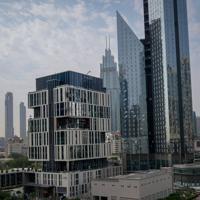
Dubai Property Index Falls 30 Percent Due to Iran Conflict
Dubai’s real estate sector has faced significant downturns recently, primarily due to escalating tensions in the Gulf region triggered by Iranian missile strikes. Following the initiation of military actions led by the U.S. and Israel against Iran, the property market has been shaken, leading to a notable drop in investment sentiment and market stability.
Plummeting Real Estate Index
The Dubai Financial Market Real Estate Index (DFMREI) has seen a dramatic decline, plummeting approximately 30% since February 28. This sharp decrease is indicative of the broader economic uncertainty gripping the region. The index that was at 16,140 at the end of February has now dropped to nearly 11,500, reflecting its lowest point since April 2025.
Investors are understandably concerned, as the real estate market is often viewed as a bellwether for economic health. The ongoing conflict, which has resulted in extensive military engagement, is likely to continue impacting investor confidence and market dynamics. With prices dropping sharply, many potential buyers may hesitate, further exacerbating the situation.
Regional Turmoil and Economic Impact
The hostilities intensified following the U.S.-Israeli joint military attacks on Iranian soil. Reports indicate that around 1,200 individuals lost their lives, including notable political figures such as the supreme leader, Ayatollah Ali Khamenei. In response to these provocations, Iran launched a series of retaliatory strikes targeting multiple nations in the region, including Israel, Jordan, and Iraq, as well as Gulf countries that host U.S. military bases.
Such geopolitical instability has significant ramifications beyond immediate safety concerns; it also hampers the business environment in Dubai. Numerous multinational corporations, including major banks and consulting firms like Citi, Deloitte, and PwC, have opted to either close their offices or instruct employees to leave the area. This trend was particularly pronounced in the Dubai International Financial Centre (DIFC), a crucial hub for financial services in the region.
Looking Ahead: Prospects for Recovery
As the situation evolves, the future of Dubai’s real estate market hinges on a resolution to the ongoing conflicts. While the immediate outlook may appear grim, historically, markets have demonstrated a capacity for recovery even in the wake of significant geopolitical turmoil. Investors are keenly watching the developments, as any sign of stabilizing conditions could trigger renewed interest in the property sector.
Furthermore, the UAE government has consistently demonstrated resilience and adaptability in crisis situations. Initiatives aimed at enhancing the investment climate and promoting economic growth may emerge as part of a broader strategy to attract both local and international investors once stability returns.
In conclusion, while the recent downturn poses challenges for Dubai’s real estate market, it is crucial for potential investors and stakeholders to remain informed and vigilant about ongoing developments. Will the market rebound, or will continued geopolitical tensions restrain growth? Only time will reveal the answers, but many are eager to see the UAE’s robust economy navigate through these turbulent times.